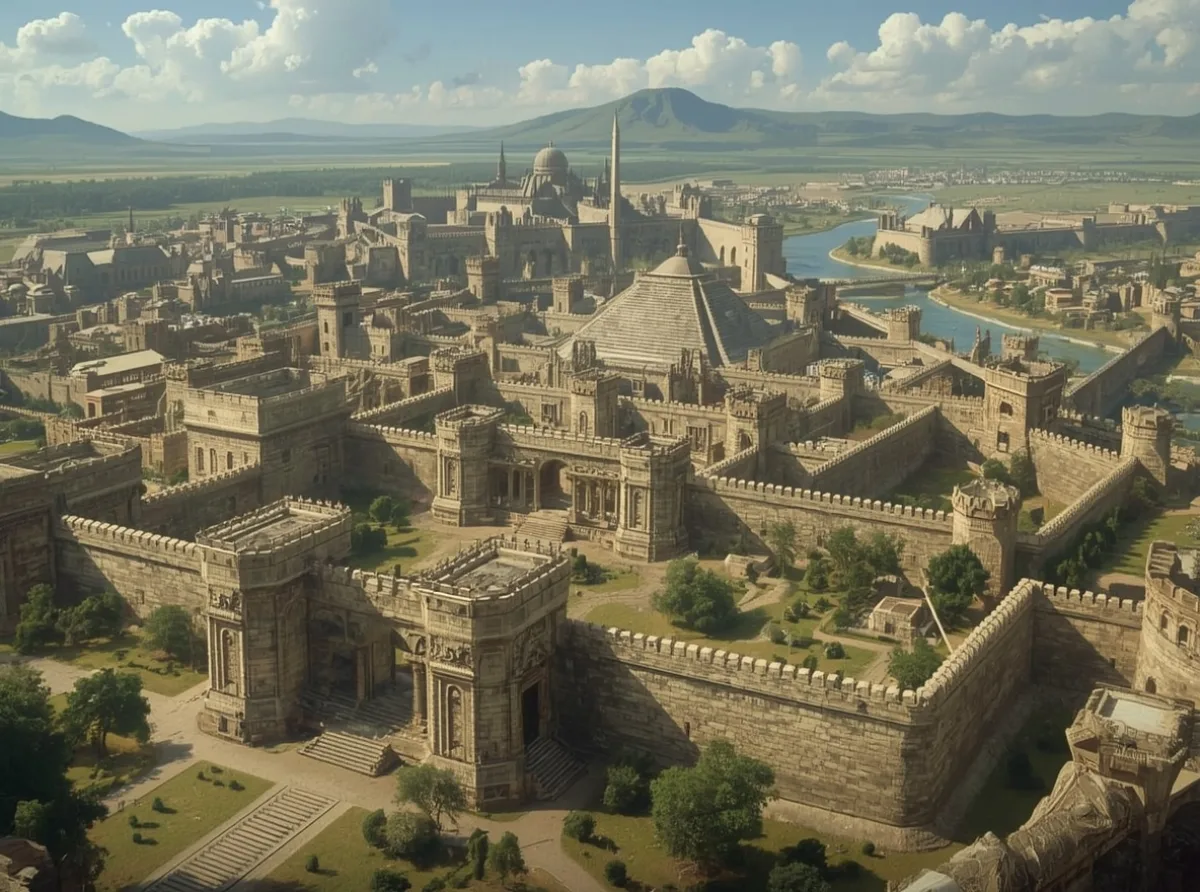
Some fantasy empire names feel large the moment you hear them. They carry weight, authority, and the sense that a long history sits behind every letter. A strong empire name can make a world feel organized and dangerous at the same time.
That atmosphere matters in games, stories, and roleplay because a name is often the first clue about what kind of power rules the land. A bright, elegant empire sounds very different from one built on conquest, old magic, or iron discipline. The right name can hint at all of that without saying much at all.
Powerful empire names usually work best when they sound deliberate. They often use hard consonants, ancient-sounding syllables, or formal structures that suggest tradition. Some feel regal. Some feel severe. Some feel like they were carved into stone centuries ago.
What Makes a Fantasy Empire Name Feel Powerful
A believable empire name usually does more than sound exotic. It creates an image. You might picture a vast capital, strict borders, ceremonial banners, or a ruler who claims divine right. That image comes from rhythm, word shape, and the emotional tone the name carries.
Names with power often share a few traits. They may sound old, even if the setting is not. They may feel broad and formal, like a nation that spans mountains, seas, or entire continents. They may also hint at control, worship, or conquest rather than simple beauty.
A powerful empire name rarely feels random. It suggests structure, legacy, and a world large enough to shape its own language.
Short names can work if they are sharp and forceful. Longer names can feel majestic if they move with a steady rhythm. Either way, the best results usually come from names that sound like they belong to rulers, records, and ancient banners.
Common traits that create atmosphere
- Strong consonants such as k, t, r, g, and v
- Formal or ancient word patterns
- Hints of land, flame, crown, stone, iron, or sun
- Balanced syllables that feel pronounceable
- Names that sound like they could appear on maps or imperial decrees
Atmosphere also depends on what the name avoids. If it sounds too cute, too modern, or too random, the illusion weakens. A powerful empire name should feel like it already has laws, armies, and history attached to it.
Empire Names That Sound Royal and Traditional
These names fit empires built around noble houses, formal courts, and old dynasties. They feel ceremonial and controlled. They are useful for a kingdom that has grown into an empire, or for a ruling line that wants every province to remember its authority.
- Valedorn Empire
- Aramith Dominion
- Solvaran Throne
- Caelorian Empire
- Thandor Keeprealm
- Merovai Imperium
- Orinthal Crownlands
- Viremont Empire
- Altherion Pact
- Seravane Dominion
- Belmora Empire
- Corvellan Thalassate
- Eldraven Imperium
- Rhaedon Empire
- Valcaryn Realm
- Toramere Crown Empire
- Ilyrath Dominion
- Nemoris Throne
- Caldoris Empire
- Vandoriel Imperium
These names work well when you want the empire to feel established. They do not need extra explanation. The formality does most of the work. “Dominion,” “Imperium,” and “Crown” add weight, while the root names provide identity.
Some of these sound more diplomatic. Others feel more martial. That balance is useful if your empire has courts on the surface and armies beneath it. A title can tell you whether the state values ceremony, law, or obedience.
Why these names feel stable
- They use familiar imperial language
- They suggest dynasties and inherited rule
- They feel easy to place on banners, seals, and coinage
- They do not lean too far into darkness or fantasy abstraction
If you want an empire that seems old but respected, this style usually works well. It feels like something scholars would write about and soldiers would swear by.
Names for Dark, Heavy, and Conquering Empires
Some fantasy worlds need a stronger edge. These names fit empires that expand by force, keep secrets in their capitals, or rule with fear as much as law. They sound heavier and less graceful. That is the point.
Dark empire names often use harsher shapes. They can feel ironclad, volcanic, or shadowed by ancient punishment. They work especially well for villains, fallen civilizations, or empires that believe mercy is weakness.
- Gravok Empire
- Varkesh Dominion
- Thornhollow Imperium
- Morzhan Throne
- Kharveth Pact
- Dreadvale Empire
- Zorathen Legionate
- Ironmire Dominion
- Volkaris Empire
- Dravenhold Imperium
- Skarvane Realm
- Narvok Throne
- Veskar Dominion
- Korvash Empire
- Blackfen Imperium
- Raventhorn Pact
- Mordyr Empire
- Halveth Crown
- Vornak Thal
- Ashkar Dominion
These names carry more tension. They do not sound gentle, and they usually should not. If the empire is feared by border kingdoms or remembered for ruthless campaigns, this style gives you that pressure immediately.
Dark empire names work best when they sound controlled, not messy. Even violence feels more powerful when the name is disciplined.
Notice how many of these names rely on hard endings or dense consonant clusters. That makes them feel firm and difficult to ignore. A name like Korvash Empire sounds different from Belmora Empire because one has blunt force and the other has polish.
Atmospheric signals in darker names
- Words linked to iron, ash, thorns, black stone, or dread
- Sharper syllables and rougher endings
- Titles that imply military control or ancient secrecy
- Less emphasis on elegance, more on pressure and dominance
These names are especially useful for fantasy settings where the empire is not heroic by default. They make a capital city feel guarded, a border zone feel tense, and a royal court feel dangerous even before any plot begins.
Empire Names That Feel Ancient, Vast, and Mythic
Some empires are not simply powerful. They are older than most living memory. These names suggest ruins, forgotten treaties, old gods, and stone roads stretching farther than anyone can map in one sitting. They fit settings where the empire’s age matters as much as its strength.
Mythic empire names often sound broader and more ceremonial. They may include sun imagery, sea imagery, celestial language, or references to relics and sacred rule. They feel less like modern political states and more like civilization at its peak.
- Aurelith Empire
- Myridian Dominion
- Solareth Imperium
- Vaeltharion Crown
- Oryndel Empire
- Talvaris Reach
- Caerolith Throne
- Elvarion Dominion
- Serolith Empire
- Toraveth Imperium
- Heliaryn Realm
- Arkendel Crownlands
- Veylath Empire
- Oracelyn Dominion
- Lunathor Imperium
- Thyrian Empire
- Calystrum Realm
- Velarion Throne
- Astraveth Dominion
- Rheolath Empire
These names can feel old in a way that is almost sacred. They suggest architecture on a grand scale, forgotten royal rites, and long cultural memory. If your world has empire ruins, lost provinces, or a capital that still stands after centuries, this style fits naturally.
The words also tend to sound smoother than the darker names. That smoother shape creates a different kind of power. It is not brutal power. It is ancestral power, the kind that survives by tradition, records, and deep belief in its own legitimacy.
When to use mythic names
- Ancient empires that predate current nations
- Relic-heavy worlds with old temples and imperial tombs
- Settings where religion and government overlap
- Stories about restoration, collapse, or inherited destiny
A name like Solareth Imperium immediately suggests more than a border map. It suggests cosmic order, inherited authority, and a civilization that may still influence the present through symbols, laws, or buried magic.
Names That Sound Militaristic and Strict
Some empires are defined by discipline. They organize, they conquer, and they rarely waste words. Names in this category sound like marching lines, fortress chains, and structured command. They are practical and severe.
These are useful when the empire is built around strategy rather than ceremony. Maybe it is a war state. Maybe it is a theocracy with a standing army. Maybe its rulers believe order is the highest virtue. The name should reflect that.
- Valkrid Empire
- Drakhar Legion
- Torvek Dominion
- Havren Command
- Keldor Imperium
- Bravok Empire
- Tharion Marshalate
- Korveth Legion
- Vornel Dominion
- Rathvek Empire
- Gralden Host
- Merkath Imperium
- Arvok Throne
- Velkran Dominion
- Shavrek Empire
- Dorvath Command
- Kalvorn Imperium
- Erthak Realm
- Bronvar Dominion
- Veshkar Empire
Militaristic names often feel strongest when they are concise. They sound like they belong on shields, war banners, and battle reports. You can almost imagine officers saying them with no ornament at all.
If an empire’s identity revolves around discipline, keep the name sharp and direct. Overly poetic wording can weaken the impression.
That does not mean the name has to be plain. It simply needs to avoid softness. Even a single strong syllable can carry the sense of command if the surrounding word structure supports it.
Names With Elegant Power Rather Than Raw Force
Not every powerful empire sounds harsh. Some feel dangerous because they are beautiful, controlled, and impossible to read at first glance. These names suit refined empires with polished courts, elite bureaucracy, magical scholarship, or a calm surface hiding immense influence.
This style is useful when you want the empire to feel intelligent and composed instead of blunt. It suggests a culture that wins through planning, diplomacy, and careful image-making as much as weapons.
- Alavienne Empire
- Serenvale Dominion
- Celesthyr Crown
- Marivelle Imperium
- Elenoris Realm
- Vaerisol Empire
- Coraline Throne
- Virelia Dominion
- Amareth Empire
- Selovar Crownlands
- Orelisse Imperium
- Caladrieth Realm
- Velisanne Dominion
- Arionelle Empire
- Theravelle Throne
- Isolmere Imperium
- Lysareth Crown
- Vandrelle Dominion
- Elarion Empire
- Meralisse Realm
These names sound softer, but they are not weak. They create the impression of a state that keeps its power behind polished gates. That can be even more intimidating than obvious aggression because it feels controlled.
Elegant power is especially effective for high fantasy empires with courts, magical academies, or noble houses competing under a single crown. The name can hint at beauty, but it should still feel like it belongs to a large and dangerous political machine.
Subtle signs of authority in elegant names
- Longer vowels and smoother transitions
- Formal suffixes like Empire, Dominion, Crown, Realm, or Imperium
- Names that sound ceremonial rather than military
- A sense of refinement without losing scale
A name like Celesthyr Crown feels different from Valkrid Empire. One suggests a polished throne room and old noble etiquette. The other suggests armored command and blunt expansion. Both can be powerful, but they shape the world in different ways.
How to Match the Name to the Empire’s Personality
Choosing the right empire name gets easier when you think about the empire as a character. Not in a poetic sense only. In a practical sense. Ask what it values, how it treats borders, and what people fear about it. The name should echo those answers.
An empire built on sacred law may want a dignified name with religious undertones. A conquest state may want something hard and efficient. A fallen empire may need a name that still sounds grand even after its glory has faded. The tone has to fit the role.
- Law and order: formal, structured names
- Conquest and force: sharp, harsh, militant names
- Ancient legitimacy: mythic, ceremonial names
- Refined control: elegant, polished names
- Fallen grandeur: noble names with a hint of decay or memory
It also helps to think about how the name would appear in the world. Would it be spoken by ambassadors? Carved into an arch? Printed on military maps? Spoken in fear by border villagers? If the name works in those settings, it probably has the right atmosphere.
A strong empire name should feel usable in the world, not only impressive on paper.
Useful Naming Patterns for Fantasy Empires
Many memorable empire names follow simple patterns. The pattern gives the name shape, while the root word gives it identity. This is one reason fantasy names often feel convincing even when they are invented. They borrow the structure of familiar political language and reshape it for the setting.
| Pattern | Effect | Example |
|---|---|---|
| Root + Empire | Clear and direct | Valedorn Empire |
| Root + Dominion | Formal and authoritative | Aramith Dominion |
| Root + Imperium | Ancient and grand | Solareth Imperium |
| Root + Throne | Royal and personal | Morzhan Throne |
| Root + Crownlands | Noble and territorial | Orinthal Crownlands |
| Root + Command | Strict and military | Havren Command |
You can also combine ideas. A root can suggest geography, mythology, or ruling philosophy. A suffix then makes the name feel official. That pairing is why simple structures often sound better than overcomplicated ones.
Good roots often come from concepts like stone, sun, shadow, flame, river, iron, star, wind, thorn, ash, crown, or vault. These carry immediate visual meaning. A name built from one of those ideas usually feels easier to remember and easier to place inside a world.
Variations by Tone and Setting
Fantasy empires do not all need the same sound. A desert empire will not feel like a mountain empire. A sea empire may want flowing syllables, while a fortress empire may want harder edges. The name should reflect the environment as much as the politics.
- Desert empires: Sol, Auri, Za, Ka, sand, flame, sun-based roots
- Mountain empires: stone, peak, fort, krag, vall, ridge-based roots
- Sea empires: tide, deep, wave, coral, current-based roots
- Shadow empires: dusk, black, ash, veil, hollow-based roots
- Sky empires: star, azure, aero, high, cloud-based roots
These environment cues do a lot of work. They help the empire feel rooted in a physical place, not just a vague fantasy idea. A name like Talvaris Reach feels different from Ironmire Dominion because the first suggests breadth and old borders, while the second suggests a harder, rougher land.
Balancing invention and readability
Highly unusual names can be interesting, but they should still be easy to say. If the name is too difficult, it becomes harder to remember and less likely to feel real. That is especially true in games where players need to repeat the name in conversation.
The strongest fantasy empire names usually strike a middle ground. They feel original, but the structure is understandable. You know instinctively whether the empire is bright, dark, old, aggressive, or refined.
More Empire Names for Different Atmospheric Uses
Sometimes it helps to have a broader set of options in one place. These names lean toward different kinds of presence, from solemn and archaic to commanding and mysterious.
- Astervane Empire
- Dralith Dominion
- Corvane Imperium
- Seldrin Crown
- Morathiel Realm
- Veyron Empire
- Thalvorn Dominion
- Arkendra Imperium
- Velmoryn Throne
- Orvath Empire
- Calthran Crownlands
- Meridox Dominion
- Vaelmor Empire
- Serkath Imperium
- Elvaron Realm
- Torvellis Crown
- Rhyndal Empire
- Korathen Dominion
- Vireldon Imperium
- Alveroth Throne
- Fenrath Empire
- Galdorin Crownlands
- Nytharel Dominion
- Solvark Imperium
- Therakos Empire
These names can serve as drafts, inspiration, or starting points. Some feel better for the empire itself. Others may work for a ruling house, a capital region, or a grand military order inside the empire.
If a name feels too broad, you can tighten it by changing the suffix. If it feels too harsh, you can soften the consonants. Small changes often shift the emotional tone more than people expect.
Choosing a Name That Leaves an Impression
A fantasy empire name lasts best when it sounds like it belongs to a real civilization with habits, symbols, and inherited power. That is why tone matters so much. The name is not just decoration. It tells players and readers what kind of authority is in the room.
When the sound matches the empire’s nature, the name becomes easier to remember. It also becomes easier to use in dialogue, maps, faction lists, and lore documents. The strongest names usually feel simple once they are placed in the right world.
The best empire names feel inevitable, as if the setting already depended on them.
That feeling comes from alignment. The name, the culture, and the setting should point in the same direction. Royal names should feel royal. Military names should feel disciplined. Ancient names should feel old enough to carry consequences. Once those parts line up, the atmosphere stays in place without effort.
In practice, that means listening for the first impression. Say the name out loud. Picture the capital. Imagine the banners, the border forts, or the throne hall. If the image appears fast and clearly, the name has done its job.
And if it sounds like a place people cross mountains to fear, admire, or serve, then it has the kind of power fantasy worlds tend to remember.