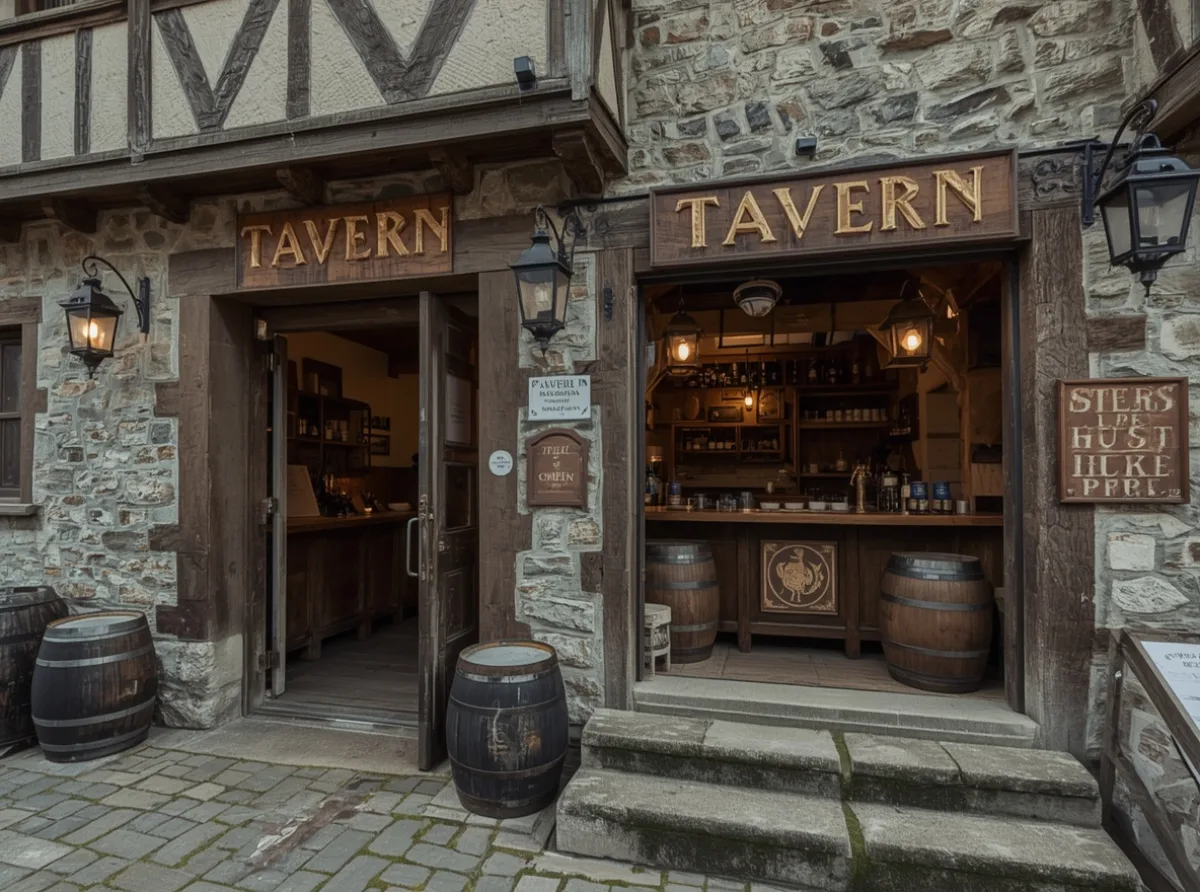
Fantasy tavern keeper names work best when they sound like they belong to a place where stories get traded as often as coin. A good tavern name can suggest warmth, old stone walls, a noisy common room, or a keeper who knows everyone in town by face and by rumor. The keeper’s name should fit that mood too. It can be sturdy, welcoming, odd, polished, or a little worn around the edges.
Medieval charm comes from names that feel grounded in everyday life, but still carry a touch of fantasy. They do not need to sound grand. In fact, the best ones often sound practical enough to belong to someone pouring ale, lighting candles, or keeping a ledger by the fire. That balance makes them memorable.
When you are naming a tavern keeper for a game, story, or roleplay setting, the setting matters as much as the syllables. A mountain inn calls for a different name than a royal city tavern. A roadside hostelry may need something simple and local, while an old inn near a castle can carry more formality. The right name makes the room feel lived in before anyone speaks.
Below are name ideas arranged by mood, style, and setting. Some feel classic and easy to use. Others lean into old-world flavor, quieter mystery, or a more refined medieval feel. Each list is meant to give you options that sound natural in fantasy worlds without drifting into anything too modern or too theatrical.
What gives tavern keeper names medieval charm
Medieval charm usually comes from a few simple patterns. Names often sound rooted in old language, local tradition, and trades that matter in daily life. They may include strong consonants, familiar endings, or titles that imply age, respect, or place.
Names with medieval charm often work because they feel practical. They suggest a person who has spent years serving travelers, dealing with weather, managing supplies, and hearing stories from all kinds of people. That lived-in quality is more important than complexity.
A tavern keeper name feels believable when it sounds like it has been used for years in a place where roads, weather, and reputation all matter.
Some names sound medieval because they use old-style given names. Others gain charm from titles, surnames, or nicknames tied to local customs. A name like “Edric Mallow” feels different from “Mira of the Oak Tankard,” even though both can fit the same world. One sounds grounded and human. The other feels more like a place-name turned identity.
Another useful trick is to match the name with the tavern’s role. A tavern keeper at a quiet village inn might need a softer, more familiar name. The keeper of a famous crossroads tavern may need a name with more presence. In both cases, the name should be easy to say out loud, because players and readers will return to it often.
Classic names with a warm innkeeper feel
These names fit friendly taverns, village inns, and roadside stops where the keeper is dependable and known by travelers. They feel simple without being plain.
- Elric Wren
- Marwen Hale
- Osric Tallow
- Branna Voss
- Hugh Merrin
- Adela Barrow
- Corwin Bell
- Isolde Marr
- Edwin Prowse
- Rowena Hale
- Gareth Alder
- Maelin Thorne
- Alric Fen
- Beatrice Holm
- Roderic Vale
- Emberly Coren
- Tristan Lark
- Honora Reed
- Joren Pike
- Mirabel Crowe
These names work well when the tavern keeper is not trying to impress anyone. They sound familiar, steady, and easy to remember. Many of them could fit a keeper who serves soup at noon, watches the door at dusk, and keeps a close eye on travelers who seem too interested in the cellar.
Some names in this group lean more masculine, others more feminine, but all of them keep a balanced medieval tone. They avoid sharp fantasy excess. That makes them useful for grounded settings where the tavern is part of normal life rather than a legendary landmark.
Why these names feel familiar
- They use compact, old-world sounds.
- They avoid modern endings and trendy forms.
- They suggest practical people with ordinary responsibilities.
- They are easy to remember in dialogue and roleplay.
If you want a keeper who feels trusted before they even speak, this kind of name is usually the safest choice. It leaves room for personality without forcing one specific image.
Names with rustic, hearthside character
Some tavern keepers feel more tied to the physical space than to noble lineage or old family records. Their names can sound earthy, local, and shaped by the work they do every day. These often fit warm inns, forest taverns, village alehouses, and family-run stops along trade roads.
- Brum Oakens
- Tilda Hearth
- Wesric Flint
- Nessa Harker
- Torven Clay
- Elswith Rowan
- Jasper Quill
- Hedda Moss
- Fenric Ash
- Odelia Stone
- Rusk Fenway
- Marra Fallow
- Corvin Reed
- Lyra Bramble
- Thane Sorrell
- Gilda Wren
- Petren Vale
- Sabra Hill
- Ulric Morn
- Vesta Alder
These names have a grounded texture. Oak, hearth, stone, ash, reed, and moss all help connect the keeper to a place that feels handmade and old. That connection matters in fantasy, because a tavern is rarely just a business. It is a shelter, a meeting room, a rumor exchange, and sometimes the first safe stop after a long road.
Names like these also suit a keeper who is competent without being flashy. They may have broad shoulders, a sharp eye for trouble, or a way of moving quickly between the kitchen and the counter. The name should support that sense of utility and comfort.
Rustic tavern names often work best when they sound connected to the land, the building, or the trade routes nearby.
Names that feel noble, polished, or city-born
Not every tavern keeper is a simple inn host. In a wealthy city, a port district, or a market quarter, the keeper may have a name that feels a little more refined. These names can suggest education, old family ties, or a tavern with better prices and higher expectations.
- Alistair Fenwick
- Seraphine Lorne
- Lucan Bellmont
- Celia Vire
- Edmund Graynor
- Rowan Delmere
- Vivien Caul
- Corwin Dales
- Juliana Wex
- Marcus Elwell
- Lenora Mire
- Theron Blacke
- Amabel Crest
- Gideon Vale
- Evelyn Moor
- Cassian Holt
- Isabeau Merrick
- Octavian Rill
- Matilda Wrenford
- Stellan Quay
These names feel a little cleaner and more deliberate. They fit tavern keepers who deal with merchants, nobles, adventurers, or city guards. They may run a respectable inn with polished cups, a strong ledger, and a reputation that matters to local politics.
This style is useful when the tavern is meant to feel important. Maybe it is where contracts are signed. Maybe it sits near the castle gate. Maybe the keeper knows which patron can pay and which one should be watched carefully. A refined name helps carry that atmosphere.
Best uses for polished medieval names
- Guild district taverns
- Capital city inns
- Merchant quarter establishments
- Roadside inns with higher status
- Tavern keepers with old family influence
These names can also work for keepers who are quietly intimidating. A well-spoken owner with a measured tone often feels more dangerous than one who shouts. A polished name supports that kind of presence.
Mysterious names for older taverns and hidden places
Some tavern keepers seem to know more than they say. They might run a cellar tavern beneath the street, host unusual guests, or keep an old inn where no one asks about the locked door upstairs. For that kind of setting, names can feel softer, stranger, or slightly archaic.
- Morwen Ashveil
- Edric Hollow
- Selka Vane
- Orrin Nightwell
- Helia Bracken
- Varric Shade
- Linnea Thistle
- Caelan Mire
- Ysra Rowanmere
- Rhett Aldwyn
- Nerissa Crowhall
- Corven Elms
- Maura Deepen
- Thalen Wyr
- Elspeth Frost
- Joric Fenhollow
- Sabine Morrow
- Lucien Blackwood
- Briony Vale
- Fenna Moorcroft
These names suggest a keeper with quiet knowledge. They do not need to look sinister, but they do carry a little shadow. That makes them ideal for fantasy settings where taverns connect to secrets, old roads, hidden maps, or local legends about what happened decades ago.
Mysterious names tend to be strongest when they are still pronounceable. If the name is too elaborate, it can pull attention away from the tavern itself. A name like “Morwen Ashveil” feels memorable because it has mood without losing clarity.
For hidden or secretive taverns, a name with one unusual element is often enough. Too many strange sounds can make it harder to use naturally in play.
Names with a hearty, rough-edged tavern feel
Some tavern keepers are less polished and more direct. They might run a busy alehouse near docks, a borderland stop, or a place known for loud voices and strong drink. These names can sound sturdier, sharper, and more muscular.
- Brannik Stone
- Rulf Marden
- Gerran Holt
- Varda Iron
- Toric Dane
- Helmut Cray
- Norin Fang
- Elka Brunt
- Davor Pike
- Morra Kest
- Haldric Roam
- Runa Flint
- Jorvan Bale
- Thessa Marrow
- Ulric Dune
- Katrel Wold
- Fenrik Holt
- Brina Fallow
- Corlan Vex
- Rhedda Crow
These names suit keepers who have little patience for nonsense. They may be practical, blunt, and hard to fool. A rough-edged tavern keeper often becomes memorable because the name matches the room: loud mugs, busy tables, and a reputation built on survival rather than charm.
This style also works well for frontier settings. A border inn keeper may need a name that feels tough enough to belong to a place where weather, bandits, and long-distance trade all shape the day. Strong consonants help create that effect.
Short names that stay easy to say
Short names are useful in game settings because they are fast to speak and easy to remember. They can still carry medieval charm if they use old-style sounds and solid endings. These are especially handy for NPCs you expect to mention often.
- Alen
- Bryn
- Corin
- Dara
- Eld
- Fenn
- Gwen
- Hale
- Ivor
- Jessa
- Kerr
- Leof
- Mara
- Niall
- Orin
- Perrin
- Quin
- Rysa
- Tavin
- Wren
Short names are flexible. They can fit a bright village tavern, a seaport inn, or a mountain shelter with equal ease. Because they are not overloaded with detail, they let the rest of the character design do the work.
If you want to build a tavern keeper quickly, this category is often the most practical. Pair a short given name with a descriptive surname, and the result feels complete without becoming heavy.
Longer names for deeper fantasy settings
Some worlds benefit from names that feel older and more layered. These can sound like they belong to a family with a long record, a tavern with a famous sign, or an inn that has served the same crossroads for generations. Longer names create a richer impression when used carefully.
- Alaric Thornwell
- Maristella Greenbough
- Edric Hollowsay
- Isolde Fairbriar
- Theron Blackmere
- Celestine Ashford
- Garrick Moonfall
- Esmira Willowden
- Lucan Redwynd
- Honoria Bellshade
- Roderic Emberlain
- Serilda Briarholt
- Cassian Wildmere
- Adelric Storme
- Maerwen Coldridge
- Valerian Hearthstone
- Lenora Duskward
- Odric Fenhallow
- Sabella Mooren
- Traven Goldwell
Longer names are useful when the tavern keeper feels tied to a legacy. Maybe the inn has the same name as the family, or the family name is tied to the local road. These names also work well in written fantasy where the keeper might be referenced in letters, quests, and local records.
Even so, length should not become clutter. A long name works best when one part is especially memorable. “Valerian Hearthstone” stays clear because both words are strong and visually grounded.
Useful patterns for building your own tavern keeper names
If you want to create names that feel medieval without copying a list directly, a few naming patterns help a lot. These patterns are simple, but they produce names that sound like they belong in fantasy towns and roadside inns.
| Pattern | Example | Why it works |
|---|---|---|
| Old given name + nature surname | Edric Rowan | Feels rooted in place and tradition |
| Short name + trade-like surname | Mara Bell | Easy to say and easy to remember |
| Refined first name + grounded ending | Isolde Vale | Balances elegance with medieval realism |
| Rustic first name + stone/wood image | Branna Oak | Creates a hearty innkeeper mood |
| Double-barrel old-world surname | Rowena Ashcroft | Suggests history and inherited reputation |
Another strong method is to think about what the tavern keeper does all day. A keeper who manages stock, negotiates with traders, and keeps the peace may need a name with authority. A keeper who quietly serves travelers in a forest inn may need a gentler sound. The name should reflect the work as much as the setting.
Questions that help shape the right name
- Is the tavern welcoming or rough?
- Is the keeper local or from elsewhere?
- Does the tavern sit in a village, city, port, or frontier road?
- Should the name sound common, noble, or unusual?
- Will the keeper be a major NPC or a brief encounter?
Answering those questions usually narrows the choice fast. A well-fitted name feels natural immediately, while a mismatched one can make the setting feel off.
How tavern keeper names change by region and culture
Even within medieval fantasy, names do not all sound the same. A northern kingdom may favor harder consonants and colder imagery. A river city may prefer smoother sounds. A hill village may use names tied to plants, fields, or weather. Small shifts like these make a world feel more believable.
For example, a border region keeper might be called “Toric Dune” or “Brannik Holt,” while a coastal innkeeper could be “Maris Quay” or “Selene Tide.” A mountain host might be “Odric Frost” or “Helga Stone.” The function is the same, but the regional flavor changes the name’s feel.
Regional detail matters because tavern keepers often serve as local anchors. Their names can quietly tell players what kind of place they have entered.
If you are building a whole world, keep some naming habits consistent within each region. That gives the names a shared family resemblance. It also helps tavern keepers feel like part of the same culture instead of random additions.
Final name ideas with strong medieval charm
Here is one more compact set of names that blends warmth, age, and fantasy flexibility. These can work well for tavern keepers, inn hosts, and alehouse owners in classic medieval settings.
- Amris Vale
- Bella Thorne
- Corvin Marsh
- Delya Wren
- Eamon Crest
- Fiora Bell
- Garron Pike
- Helene Moor
- Imric Bellows
- Jessa Flint
- Kelric Fen
- Liora Ash
- Merrin Holt
- Nevan Crowe
- Orla Bracken
- Perris Grey
- Quella Moss
- Rian Tallow
- Sabin Oak
- Tressa Ward
- Ulva Reed
- Verran Dale
- Willa Morn
- Xandor Vale
- Ysolde Marr
These names are broad enough to fit many kinds of fantasy taverns, yet specific enough to avoid sounding generic. That combination is usually the sweet spot. A keeper name should feel like it has history, but it should still be easy to drop into a scene without explanation.
When the name matches the room, the tavern becomes easier to picture. A glowing hearth, a row of tankards, a rough counter, a chalkboard menu, a bundle of herbs hanging by the door, and a keeper with the right name all work together. That small fit between sound and setting is what gives medieval fantasy names their charm.