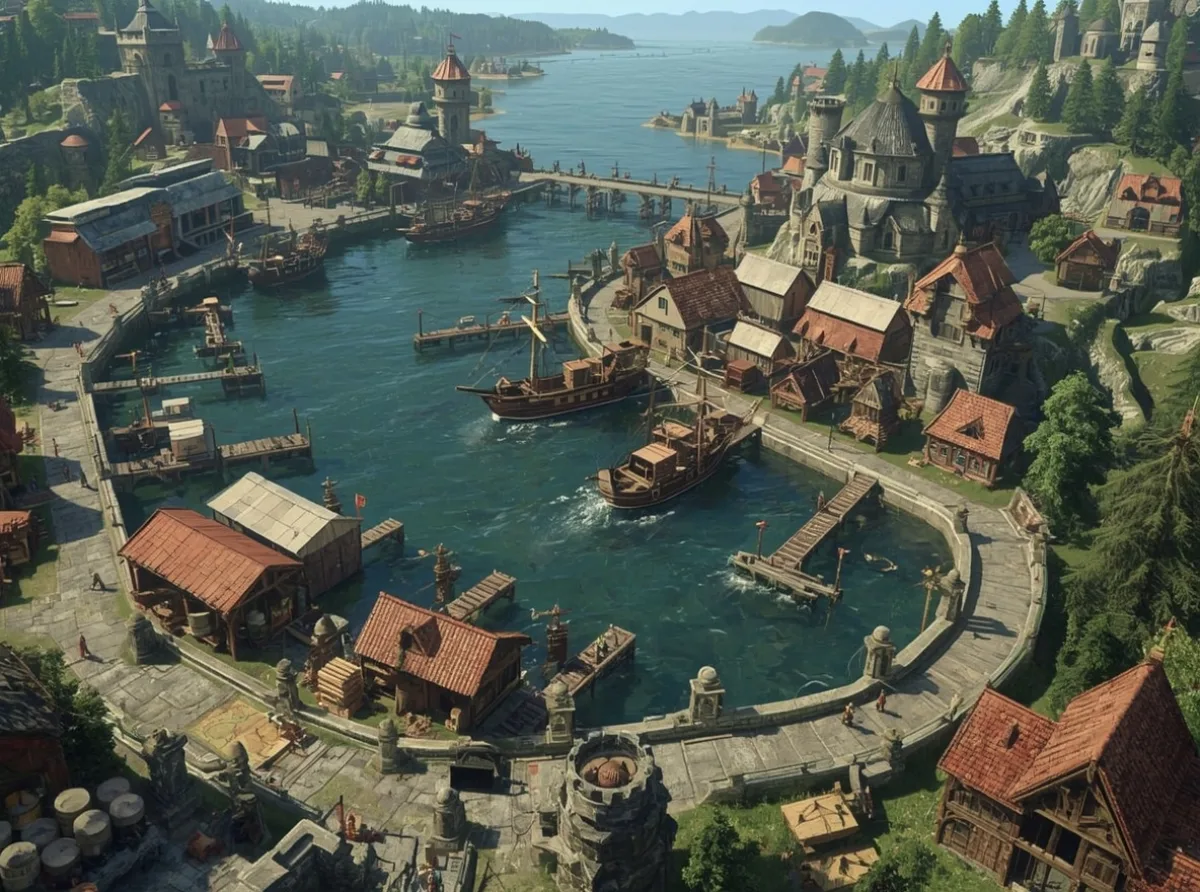
A fantasy port city does more than sit on a coastline. It carries the smell of salt, cargo, incense, wet rope, foreign coin, and long-distance travel. The best names for these places feel busy even before you learn what they sell or who rules them. They suggest movement. They suggest risk. They suggest a place where the world opens wider than expected.
That is why port city names are so useful in fantasy worldbuilding, RPG campaigns, and story settings. A good name can hint at merchant fleets, pirate coves, imperial docks, hidden smugglers, or old stone harbors that have survived centuries of storms. Some names sound practical and commercial. Others feel romantic, dangerous, or ancient. The strongest ones often mix two ideas at once: trade and adventure.
In fantasy, a port city is rarely just a map marker. It is a meeting point. Sailors arrive with strange goods. Traders bring politics with their crates. Adventurers come looking for contracts, rumors, and passage to somewhere risky. Even the city’s name can carry that energy if it feels shaped by water, exchange, and travel across unknown seas.
What gives a fantasy port city name its energy
Port city names become memorable when they sound like they belong to a working harbor, not just a decorative fantasy map. The name may reference tides, ropes, winds, docks, reefs, salt, lanterns, bronze, silver, or gates. It may also hint at the city’s history: a place founded by explorers, protected by sea walls, or built around a legendary trade route.
Names with trade energy often feel grounded and organized. They suggest warehouses, guilds, ledgers, customs houses, and busy quays. Names with adventure energy feel slightly looser. They imply hidden routes, storm-tossed coves, outlaw markets, and ships that never came back the same way they left.
A strong port city name usually does one of three things: it sounds maritime, it sounds commercial, or it sounds like a gateway to danger and discovery. The best names often do all three at once.
Sound matters too. Hard consonants can make a city feel fortified and practical. Softer vowels can make it feel older, more coastal, or more mythical. Longer names may feel noble and ancient. Shorter names often feel sharper and easier to remember, which works well for active trading hubs or pirate-friendly harbors.
Classic port city names with trade-first energy
These names lean into commerce, shipping, and the everyday life of a harbor city. They work well for merchant republics, river mouths, and prosperous coastal capitals. They sound busy without becoming overly ornate.
- Brasshaven
- Saltmere
- Iron Quay
- Merrowgate
- Cinderdock
- Goldbarrow
- Westport Vale
- Harborstead
- Seawick
- Port Halden
- Rivenshore
- Windmarket
- Black Harbor
- Lowtide Reach
- Dockspire
- Marrowpoint
- Stonewake
- Baycrest
- Tidehaven
- Glassport
These names feel practical because they connect the city to a function. Brasshaven sounds like a place where coin changes hands often. Saltmere suggests fisheries, shipping lanes, and a long commercial history. Iron Quay feels strong and industrial, while Windmarket hints at foreign stalls, maritime goods, and quick deals on the waterfront.
If you want a port city that feels richer and more established, names with noble-sounding endings like haven, gate, crest, or vale can help. They make the city sound like it has structure, walls, and a civic identity beyond the docks themselves. If the city is rougher and more crowded, harsher names can make it feel more lived-in.
Why these names work well in trade-heavy settings
- They are easy to say during gameplay.
- They suggest merchants, customs, and shipping.
- They can fit large cities or smaller trade towns.
- They leave room for districts, guilds, and harbor landmarks.
For example, a city called Glassport may have mirrored harbor towers, imported luxury goods, and a strong merchant class. A city called Cinderdock may feel older and grittier, with smoke from shipyards and forge districts near the water. The name shapes the image quickly, which is useful when you want players or readers to understand the city in one glance.
Adventure-heavy port city names with a sense of motion
Some port cities are built to launch expeditions, not just move cargo. They may sit at the edge of dangerous seas, near jungle coasts, under cliffside fortresses, or beside archipelagos filled with ruins. These names usually feel more restless. They imply departure, travel, and the promise of trouble beyond the harbor mouth.
- Stormreach
- Starfall Bay
- Driftpoint
- Voyager’s Rest
- Wyrm’s Landing
- Farshore
- Moonwake Port
- Skyrun Harbor
- Tempest Key
- Rooktide
- Northwind Crossing
- Seabreak Citadel
- Lantern Cove
- Goldwake
- Deepwater Gate
- Saltarrow
- Crow’s Passage
- Hidden Reef Port
- Eastbreak
- Talon Bay
These names feel active because they point outward. Stormreach sounds like a last safe harbor before open water. Voyager’s Rest feels like a place where crews recover before the next voyage. Wyrm’s Landing suggests old legends, dangerous shores, and stories told in taverns after dark. Even a name like Saltarrow has motion in it, like a ship cutting through rough water.
Adventure energy often comes from a sense of distance. Ports are naturally full of that feeling because they connect known land to the unknown sea. A city named Deepwater Gate may be the starting point for treasure hunts, naval missions, or expeditions into lost islands. A name like Lantern Cove can suggest safe entry through fog, secret codes, and late-night arrivals.
When a port city sounds like the beginning of a journey, it instantly feels more playable. Players can imagine loading cargo, boarding a ship, or hearing about a route nobody has managed safely in years.
Darker port city names for smuggling, secrets, and old power
Not every harbor is bright and lawful. Some fantasy port cities thrive on black-market trade, privateers, cursed cargo, or old ruling families with too much control over the docks. These names tend to sound heavier. They may carry shadows, stone, ash, or iron in the wording.
- Graveshore
- Nighttide
- Ravensalt
- Blackwake
- Moonless Quay
- Harrowport
- Brinehold
- Thornharbor
- Duskmoor Bay
- Oathdock
- Chainwater
- Vesperhatch
- Coldreef
- Gallows Reach
- Wraithmarsh Port
- Ironveil Harbor
- Rookharbor
- Smokecliff
- Fallowdeep
- Severport
These names work because they feel like they know something. Graveshore sounds like a place where wrecks, graves, and old vows are part of local history. Blackwake suggests ships with questionable cargo or a navy with a harsh reputation. Harrowport feels tense and old, while Oathdock sounds like a harbor where contracts matter and betrayal has consequences.
Darker names are especially useful when the city has an underworld. If smugglers, assassins, or forbidden relic dealers operate near the docks, the name can quietly support that tone. It does not need to spell everything out. A word like dusk, chain, gallows, or wraith gives the harbor a colder edge without making it feel cartoonish.
Useful details that make darker names feel believable
- Names tied to weather often feel more natural: tide, brine, mist, storm.
- Stone and iron can suggest fortresses, prisons, and naval power.
- Words linked to death or warning add danger without overexplaining it.
- Short names can feel harsher; longer ones can feel more ceremonial.
If you want a city that feels like a place where deals are made in back rooms and ships disappear at night, a name like Moonless Quay may be ideal. It sounds coastal, secretive, and a little unstable. That kind of name can carry a whole campaign premise with very little effort.
Elegant and royal port city names
Some port cities are not rough frontier harbors. They are polished capitals, seat cities of admiralty, or ancient trading centers with marble piers and diplomatic fleets. These names often sound elevated, balanced, and slightly ceremonial. They work well for settings with noble courts, expensive imports, and long histories of overseas rule.
- Vallisport
- Coral Crown
- Aureline Bay
- Silvergate Harbor
- Maris Vale
- Highwater Court
- Estuary of Morn
- Caldris Quay
- Brighthelm Port
- Opaline Reach
- Queenshore
- Seabright Haven
- Ashmere Docklands
- Velora Harbor
- Thalass Vale
- Port Elarin
- Sunspire Quay
- Bellwater Crown
- Corven Port
- Lunaris Harbor
These names feel refined because they blend sea imagery with courtly language. Coral Crown sounds ceremonial, expensive, and political. Silvergate Harbor suggests a major gateway city with formal customs and prestige. Highwater Court could be a royal port district where foreign envoys arrive under guard.
Elegant port city names are useful when the harbor is part of a bigger power structure. They imply control, wealth, and influence over trade routes. Even the docks may be decorated, taxed carefully, and guarded by disciplined fleets. A city named Brighthelm Port feels like a place where tradition and commerce meet without losing dignity.
Names with royal or elegant energy are strongest when they still feel maritime. If the sea disappears completely, the city can start to feel like a palace that happens to have ships nearby.
Wild frontier port city names for explorers and rough seas
Frontier ports sit at the edge of mapped waters. They are where expeditions begin, where maps change, and where the sea still feels larger than the city’s walls. These names often feel less polished, more weather-beaten, and more open to improvisation.
- Farbreak
- Tidefall
- Reefwatch
- Drifthelm
- Seagate Hollow
- Brackwater
- Stormglen Port
- Northreef Haven
- Wavecross
- Skullharbor
- Ridgeport
- Saltwatch
- Fogdeep
- Greywake
- Cliffhaven
- Needleshore
- Harbor of Crows
- Westfall Quay
- Tidebreak Point
- Low Reef Port
These names work best when the city feels exposed to weather and uncertainty. Reefwatch immediately suggests danger, navigation, and constant vigilance. Drifthelm sounds like a place built by practical people who live close to the sea but never fully tame it. Skullharbor is more brutal and dramatic, useful if the city has a pirate reputation or a bad past that still clings to it.
Frontier ports often need names that imply both survival and opportunity. Brackwater sounds imperfect and raw, but that is part of the appeal. A place like Fogdeep may be difficult to reach, yet it could serve as a gateway to old ruins, hidden bays, or shipping routes no one else dares to use. These names make the world feel larger because they point beyond the edge of safety.
How to choose a port city name by function
One of the easiest ways to name a fantasy port city is to decide what it does best. Is it a trade hub, a naval fortress, a pirate haven, a pilgrimage stop, or an expedition base? Once you know the city’s role, the name usually becomes easier to shape.
| City role | Name style | What it should suggest |
|---|---|---|
| Merchant capital | Polished, civic, stable | Guilds, taxes, warehouses, foreign trade |
| Pirate refuge | Sharp, shadowed, rough | Hidden coves, outlaw markets, uneasy alliances |
| Royal harbor | Elegant, formal, historic | Admiralty, diplomacy, fleets, heritage |
| Frontier port | Weathered, open, adventurous | Expeditions, maps, storms, new routes |
| Ancient sea city | Mythic, old, layered | Ruins, old gods, lost trade empires |
Function also affects word choice. A merchant city might use words like gate, port, quay, market, and haven. A naval city may favor hold, helm, bastion, watch, or crown. A pirate harbor often sounds better with black, skull, crow, or tide. An ancient sea city can use more lyrical or slightly strange elements, such as thal, maris, vel, or lunar imagery.
When the name matches the city’s role, the setting feels easier to picture. Players understand what kind of place they are entering before anyone describes the streets. That clarity can make trade routes, quests, and political factions feel more grounded.
Patterns that make fantasy port city names feel natural
Even imaginative names often follow familiar patterns. That is part of what makes them easy to remember. Port city names frequently combine a maritime word with a place word. They may also mix a physical feature with a civic function.
- Sea + civic term: Seagate, Seabright, Seaward, Seacrown
- Tide + location term: Tidehaven, Tidebreak, Lowtide, Hightide
- Harbor + descriptor: Black Harbor, Iron Harbor, Hidden Harbor
- Quay + mood word: Moon Quay, Oath Quay, Storm Quay
- Bay + symbolic term: Star Bay, Gold Bay, Crown Bay
These combinations feel useful because they instantly create a mental picture. They also give you room to build districts and landmarks. If the city is called Tidehaven, you can later name its merchant quarter, old docks, tidal walls, and shipwright lane in a way that stays consistent. The city name becomes a foundation instead of a decorative label.
Another common pattern is to use a made-up root that sounds regional or ancient. Names like Velora Harbor, Caldris Quay, or Port Elarin feel fantasy-based without becoming hard to pronounce. That balance matters when the city name appears often in dialogue, maps, or quest logs.
Mixed naming styles for richer fantasy worlds
Some of the best port city names blend multiple tones. A city can be wealthy but dangerous. Old but active. Noble but just a little corrupt. Mixing styles helps the place feel more complete.
- Stormcrown Port
- Amberwake Harbor
- Grimmer Bay
- Velthorn Quay
- Golden Dusk Harbor
- Ravenmere Port
- Marble Tide Gate
- Thorncrest Dock
- Silverbrine Haven
- Frostwake Bay
- Embershore
- Blackfin Reach
- Opal Harbor
- Stonecurrent Port
- Crescent Quay
- Dawnreef City
- Moonsteel Harbor
- Redwake Bay
- Highsalt Port
- Verdant Dock
These names do well because they avoid feeling one-note. Stormcrown Port sounds powerful and official, but also exposed to weather and danger. Amberwake Harbor feels warm at first, yet the word wake adds motion and a little unease. Moonsteel Harbor suggests both beauty and military strength, which is useful for a city that handles diplomacy, trade, and naval defense at once.
Mixed styles are especially effective in campaign settings with multiple factions. One district may be elegant, another criminal, and a third packed with sailors from foreign continents. A name with layered meaning can hold all of that without sounding forced.
If the city has contradictions, let the name carry them. A port can be beautiful and worn down, wealthy and dirty, holy and exploitative, all at the same time.
Subtle naming ideas versus dramatic naming ideas
Not every port city needs to announce itself loudly. Some names work best because they are subtle. They sound like real places people would live and work in every day. Others are more dramatic and suit legendary settings, famous battlegrounds, or major campaign hubs.
Subtle names tend to rely on simple combinations and familiar place words. Tidehaven, Saltmere, Brackwater, and Seabright are easy to imagine on a map. They feel stable and believable. Dramatic names often introduce stronger imagery: Graveshore, Stormreach, Skullharbor, Moonless Quay, or Wyrm’s Landing. These names make the city feel like a story event before it even appears on screen.
There is no single right choice. The important part is matching the name to the city’s role in the world. A quiet commercial port does not need a giant mythic title. A capital that controls five kingdoms across the sea probably does.
Final name set for extra inspiration
When a setting needs more options, it helps to have a broad mix of names that can fit different coastal cultures, trade routes, and levels of danger. This final group leans into flexibility and can be used for towns, city-states, or major harbors with distinct identities.
- Ashport
- Blueharbor
- Crescent Dock
- Dunewake
- Fellwater
- Goldharbor
- Hollow Quay
- Islegate
- Jettymere
- Keelpoint
- Lighthouse Bay
- Mariner’s Crest
- Northdock
- Open Tide
- Pelican Reach
- Queenswater
- Rift Harbor
- Seasong Port
- Thornbay
- Wavehill
- West Quay
- Yarrow Harbor
These names cover a wide range of moods. Some feel approachable, like Blueharbor or Lighthouse Bay. Others feel more remote or dangerous, like Fellwater and Rift Harbor. A few sound ideal for major trade centers, such as Goldharbor and Queenswater. That range makes them handy when you need multiple port cities in the same world without making them sound repetitive.
Port city names stay memorable when they carry the pressure of the sea and the pull of distant routes. Trade gives them structure. Adventure gives them movement. Once those two forces are in the name, the city often starts to feel alive on its own.