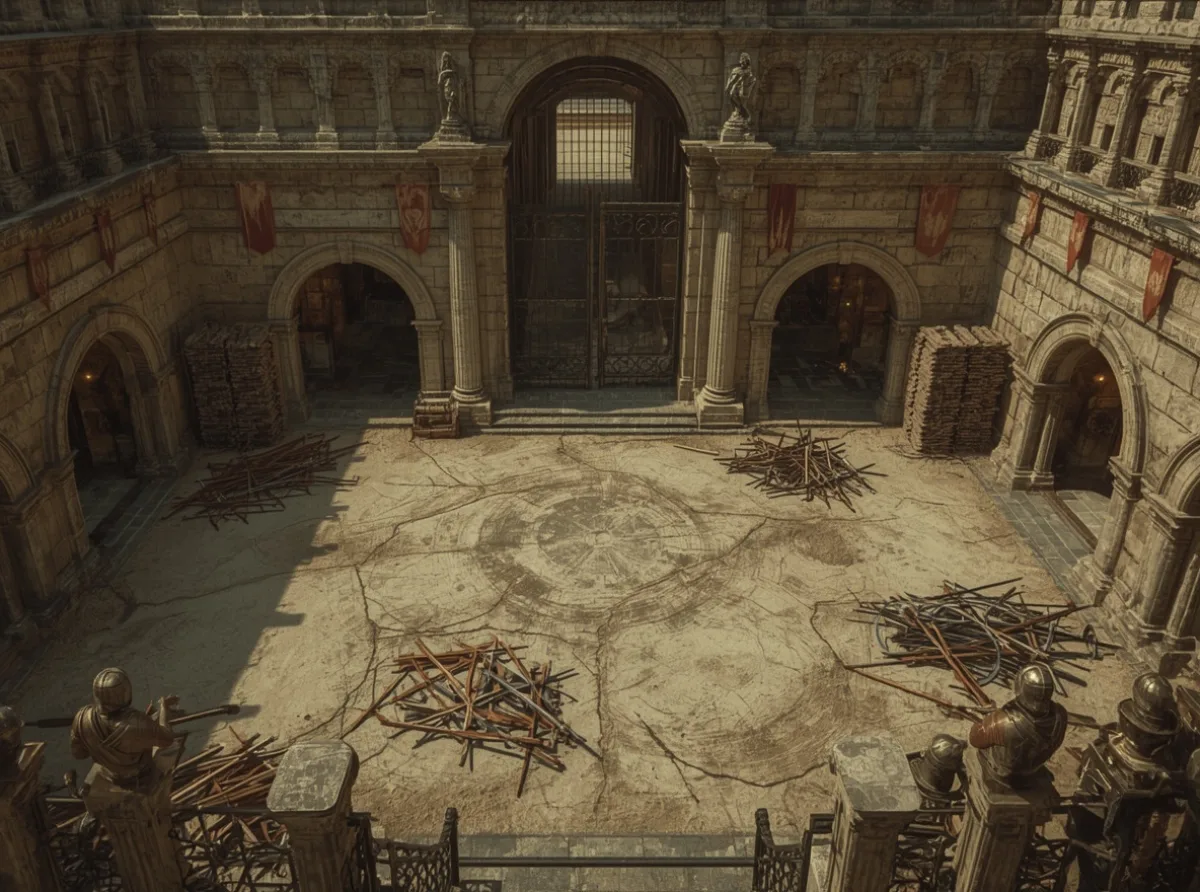
Fantasy gladiator names need more than sound. They need weight. A good name should feel like it belongs in a dust-covered arena, under chanting crowds, with steel ringing somewhere in the background.
That is why the best names in this style often mix toughness with a sense of ritual. Some sound ancient. Some sound brutal. Others feel noble in a dangerous way, like a champion who survived too many fights to sound ordinary.
When a gladiator name works well, it is easy to picture the character before anything else is explained. You can almost hear the announcer calling it across the arena. You can also tell whether the name belongs to a savage fighter, a disciplined arena veteran, or a cursed warrior who carries a darker story.
What makes a fantasy gladiator name feel fierce
Fierce atmosphere usually comes from a few simple choices. Strong consonants help. So do harsh syllables, old-world sounds, and names that suggest damage, fire, iron, blood, stone, or war. Even a clean and elegant name can feel dangerous if it has the right shape.
Gladiator names often work best when they sound like they came from a culture that values combat as performance and survival at once. That means the name can be ceremonial, but it should never feel soft. It needs tension. A good gladiator name can be proud, feared, respected, or all three.
Fierce names usually combine two traits: a hard sound and a clear image. If the name makes you picture armor, scars, flames, blades, or an arena floor, it is already moving in the right direction.
Another useful detail is rhythm. Short names can feel sharp and aggressive. Longer names can feel ceremonial or legendary. Both work, but they create different moods. A one-word arena title may sound like a battlefield nickname. A longer name may sound like a champion’s full oath-name, used only during formal combat.
Where these names fit best
Fantasy gladiator names show up in a lot of places. They work in roleplaying games, arena-based campaigns, fantasy novels, character creation screens, and worldbuilding notes. They also fit well when you need a fighter who is famous for survival, not just strength.
These names are especially useful when the setting has public combat, slave pits, honor duels, blood sports, or ceremonial tournaments. In those worlds, names are often part of reputation. A single strong name can carry history before the character even speaks.
- RPG fighters and arena champions
- Fantasy book characters with combat-heavy backgrounds
- Roleplay avatars in coliseum or war settings
- NPCs tied to imperial games or underground pits
- Boss characters with savage or royal combat themes
Classic fierce gladiator names
Classic names usually sound grounded and direct. They do not try too hard. Instead, they rely on hard edges, familiar fantasy structure, and a sense that the character has fought long enough to earn the name.
These are useful when you want a name that feels believable in a medieval or ancient-inspired arena. They can sound human, but still dangerous. They also work well for veterans, captains, pit champions, and undefeated challengers.
- Kael Vorn
- Brakus Thorne
- Rovan Ash
- Draven Holt
- Marek Steel
- Tavian Rook
- Corvin Vale
- Lucan Brim
- Garruk Flint
- Orren Vex
- Varic Dorn
- Soren Graves
- Jarek Morrow
- Hektor Cain
- Torin Black
- Varek Thorn
- Silas Raze
- Quorin Dane
- Aric Ven
- Belric Storm
Names like these feel fierce because they are compact and solid. There is rarely any wasted sound. Even the softer ones still carry a sharp final edge, which helps them feel ready for combat.
Why these names work in arena settings
In a gladiator story, the audience often hears the name before they know the person. That means the name has to do a lot of work. Classic names are easy to remember, easy to shout, and easy to place inside a battle announcement.
They also leave room for titles. A fighter named Draven Holt can later become Draven Holt, the Ash-Tier Champion. That flexibility matters in fantasy settings, where rank and legend often grow around the original name.
Dark and brutal gladiator names
When the setting turns harsher, the names should follow. Dark gladiator names tend to feel more ruthless, cursed, or violent. They often use imagery tied to ash, bone, blood, iron, rot, night, and ruin.
These names are a strong fit for grim fantasy worlds, underground arenas, demon-backed empires, or warriors who were shaped by cruelty. They carry less polish and more pressure. They sound like survival, not ceremony.
- Blood Varr
- Raze Morcant
- Ashkar Void
- Nox Thren
- Veyr Carrion
- Skorn Vale
- Dreaden Mour
- Orthus Grim
- Khar Voss
- Malrec Hound
- Serak Bleak
- Vornyx Tread
- Thalor Ruin
- Graven Dusk
- Morvane Iron
- Cael Rothe
- Nyvar Ash
- Brun Sable
- Zarek Hollow
- Valthor Shade
These names feel fierce because they suggest damage before action even begins. A character named Valthor Shade already sounds like someone who has stepped out of a place most people would avoid.
Dark gladiator names should not rely only on scary words. The strongest ones still sound usable in a real setting. If the name is too overloaded, it can lose impact. Clean darkness often hits harder than forced horror.
Best uses for darker names
Dark names work especially well for pit fighters, cursed champions, anti-heroes, or characters with a history of slavery and revolt. They also fit worlds where gladiators are tied to necromancy, forbidden rituals, or imperial punishment.
If your arena is part of a failing empire or a brutal magic system, darker names help the world feel consistent. They turn the fighter into part of the setting’s moral weight.
Royal and legendary gladiator names
Not every gladiator name needs to sound dirty or savage. Some of the most memorable ones feel regal. They suggest a fighter who was trained for public spectacle, praised by nobles, or treated like a living symbol of power.
These names usually sound broader and more formal. They can still be fierce, but the fierceness comes from authority. A legendary gladiator name may sound like it belongs to a champion whose victories changed the politics of the arena itself.
- Aurelian Voss
- Caedric Sunfall
- Valen Dreadcrown
- Lucivar Thornhelm
- Seraphon Ward
- Theron Goldmar
- Maelor Crest
- Alaric Vayne
- Rhevan Crowntide
- Oberic Flame
- Elyndor Brass
- Varian Halcyr
- Cassian Redwing
- Belisar Rune
- Daeron Ironcrown
- Marcell Vire
- Leonis Vale
- Corian Bast
- Tavian Crownfell
- Octavian Haze
These names work because they sound like they come with history. They feel less like a random fighter and more like a name that banners would carry. The atmosphere becomes grand, but the combat edge stays intact.
How to make royal names still feel dangerous
A royal gladiator name needs a hard detail somewhere. That may be a sharp final syllable, a battle-linked surname, or a title that hints at conquest. Without that, the name can drift too close to noble fantasy and lose its arena tension.
Names like Dreadcrown, Sunfall, or Ironcrown help solve that problem. They keep the regal shape while adding pressure and conflict.
Ancient and ceremonial gladiator names
Some gladiator names feel strongest when they sound old. Ancient-inspired names often use longer vowel patterns, classical roots, or forms that resemble names from forgotten kingdoms. They fit better in mythic coliseums, temple arenas, and empires with deep tradition.
These names usually suggest ceremony, lineage, and cultural weight. The fighter may not be the loudest one in the arena, but the name itself feels official, almost carved into stone.
- Aurexian Thal
- Demorath Vale
- Velorian Crest
- Marathon Vire
- Orphanis Dorne
- Calidor Rex
- Selvian Tor
- Iskander Bronze
- Hadrion Flint
- Elyros Vann
- Theskar Rune
- Coralus Veth
- Adranor Bell
- Veskarion Ash
- Orythas Cale
- Phorin Dray
- Lucorim Stone
- Beltharion Kain
- Ascaris Vole
- Theridon Mark
Ancient names are useful when the world itself is rich in tradition. They make gladiators feel like part of a long chain of rituals rather than isolated fighters. That can deepen the arena’s atmosphere fast.
If a world has old gods, sacred tournaments, or inherited combat rites, ceremonial names can make the gladiator feel like a piece of living history.
Short and sharp gladiator names
Short names hit quickly. They are easy to remember and easy to imagine on a helmet, shield, or combat ledger. For a gladiator, that kind of simplicity can be powerful.
These names often feel brutal because they do not give the audience much softness to hold onto. They are direct, clipped, and ready for action. They also work well for silent fighters or characters who rely on presence more than speech.
- Rax
- Korr
- Venn
- Drax
- Thar
- Bruk
- Zol
- Kael
- Vorn
- Roth
- Nem
- Grim
- Tor
- Kain
- Vex
- Harl
- Jorr
- Skel
- Maul
- Drik
Short names often feel fiercer than longer ones because they strike like a single blow. They are especially useful for fighters who are known by one feared name in the arena.
When to choose a short name
Use a short name when the character should feel focused, intense, and hard to read. It works well for a pit brawler, a masked champion, or a beastlike fighter with a strong reputation.
These names also pair well with titles. Rax of the Red Pit. Vorn the Unbroken. Korr the Chainbreaker. The title does the worldbuilding, while the name does the damage.
Longer names with a louder presence
Some gladiators need names that sound larger than life. Longer names can feel more heroic, ancient, or theatrical. They are useful for characters tied to prestige, prophecy, or legendary arena records.
These names are often built with stronger internal rhythm. They should still be easy to say aloud. If they become too complex, the fierce atmosphere turns into confusion.
- Valerion Blackthorn
- Azarian Stormveil
- Corvander Ironmark
- Thalorian Ashblade
- Rhevandar Nightscar
- Otharion Grimward
- Belthorian Ember
- Drasimir Warfell
- Caelthar Voss
- Marovian Redaxe
- Toravian Bloodcrest
- Selkarion Dusk
- Varathen Hail
- Luceron Forge
- Orivandor Vane
- Therakian Rime
- Jorvath Emberfall
- Elvarion Brute
- Kaedorian Flint
- Nerovian Torch
These names can feel especially strong when the gladiator is tied to an elite school, a noble patron, or a famous bloodline. They sound like names people repeat in full because shortening them would lose some of their power.
How atmosphere changes the meaning of a gladiator name
The same base name can feel very different depending on the world around it. In a bright imperial arena, even a harsh name can sound honorable. In a ruined undercity pit, the same name can feel like a threat.
That is why atmosphere matters as much as the name itself. Armor style, arena layout, faction culture, and local beliefs all shape how a name lands. A warrior called Kael Vorn feels different in a marble coliseum than in a volcanic pit surrounded by chains.
| Atmosphere | Name Style | Effect |
|---|---|---|
| Imperial arena | Regal, formal, title-friendly | Feels prestigious and public |
| Underground pit | Short, harsh, brutal | Feels raw and dangerous |
| Mythic temple combat | Ancient, ceremonial, elevated | Feels sacred and old |
| Dark fantasy war zone | Shadowed, fractured, grim | Feels cursed and violent |
That mix is useful because it lets you adjust tone without changing the whole concept. A fierce name does not need to be extreme. It just needs to match the world honestly.
Common naming patterns that create fierce atmosphere
Most strong gladiator names follow recognizable patterns. Once you notice them, it becomes easier to make new ones that still sound natural.
- Hard consonants like K, T, V, R, and X
- Image-based endings such as -thorn, -ash, -grave, -dusk, -iron, or -blade
- One-word arena handles or longer full names with titles
- Names that suggest damage, flame, stone, or shadow
- Old-sounding syllables that feel historical rather than modern
You do not need all of these at once. Often, two or three are enough. A name like Brakus Thorne already feels fierce because of sound, rhythm, and imagery working together.
A memorable gladiator name usually gives you a mental picture in under two seconds. If the name makes you picture the arena, the armor, or the scars immediately, it is doing its job.
Alternative naming styles with similar energy
If you want names that still feel fierce but lean in a slightly different direction, there are a few useful variants. Some sound more beastlike. Some sound more magical. Others lean into titles, ranks, or epithets.
Beast-leaning gladiator names
These names feel primal and animal-like. They work well for fighters with wild reputations or brutal combat styles.
- Rogar Fang
- Threx Howl
- Varr Cinderclaw
- Korin Wolfbane
- Drask Horn
- Malik Brutetooth
- Harn Ashfang
- Vek Talon
- Orin Bloodhorn
- Jorak Ironclaw
- Narvo Razorhide
- Skarn Pelt
- Rhek Snarl
- Torven Felltooth
- Brakk Wildmark
Magic-touched gladiator names
These names feel fiercer in worlds where magic and combat are tightly linked. They can hint at cursed weapons, enchanted armor, or spellbound bloodlines.
- Myrion Emberhex
- Valcyr Runefire
- Thalios Voidbrand
- Eryx Stormsigil
- Corven Dreadspell
- Zael Ashrun
- Oraxis Nightglyph
- Belor Flameward
- Kaeric Hexblade
- Seroth Ironsigil
- Veylan Wraithmark
- Luceryn Thornsigil
- Arvex Spellscar
- Nyric Runeash
- Tovian Bloodglyph
These alternative styles help when the gladiator is more than just a fighter. Maybe the character is a ritual combatant, a magical champion, or a cursed heir to an arena house.
Practical tips for choosing the right name
Pick the name based on how you want the fighter to be remembered. If the character should feel feared, use sharper sounds and darker imagery. If the character should feel respected, use a more noble shape with a hard final note.
It also helps to think about how the name will sound spoken aloud. Gladiator names are often announced. If the name has a strong beat and clean pronunciation, it will usually work better in roleplay or writing.
- Choose short names for fast, brutal impact
- Choose longer names for legend, rank, or formal titles
- Use dark imagery for grim or cursed settings
- Use regal imagery for elite arena champions
- Keep pronunciation clear if the name will be said often
The best gladiator names do not just sound fierce. They fit the world, the fighter, and the kind of attention the character should draw. That balance is what makes them feel believable.
More name ideas with strong fierce atmosphere
If you want a broader pool of options, these names lean into different kinds of arena energy while still keeping a hard edge.
- Kaelrix Storm
- Borun Vale
- Tharn Crest
- Vexlan Red
- Morik Thorn
- Jarric Flame
- Othan Voss
- Cravian Dusk
- Rendar Iron
- Silvan Raze
- Torveth Ash
- Khalen Ridge
- Varric Dread
- Elrik Forge
- Dovian Shade
- Branor Pike
- Serik Mourn
- Caeron Wyrm
- Havor Black
- Rhettor Grim
- Malvaren Cry
- Orvik Tarn
- Zerian Foe
- Lorcan Vile
- Thavian Ruin
Some of these are cleaner, some are harsher, and some feel almost ceremonial. That mix is useful because gladiator naming is not one-note. Different arenas, factions, and champions all call for different kinds of force.
A fierce fantasy gladiator name should leave an impression even before the first strike lands. The right one feels like a banner, a warning, and a history all at once.
When that happens, the name stops being just a label. It becomes part of the combat atmosphere itself.