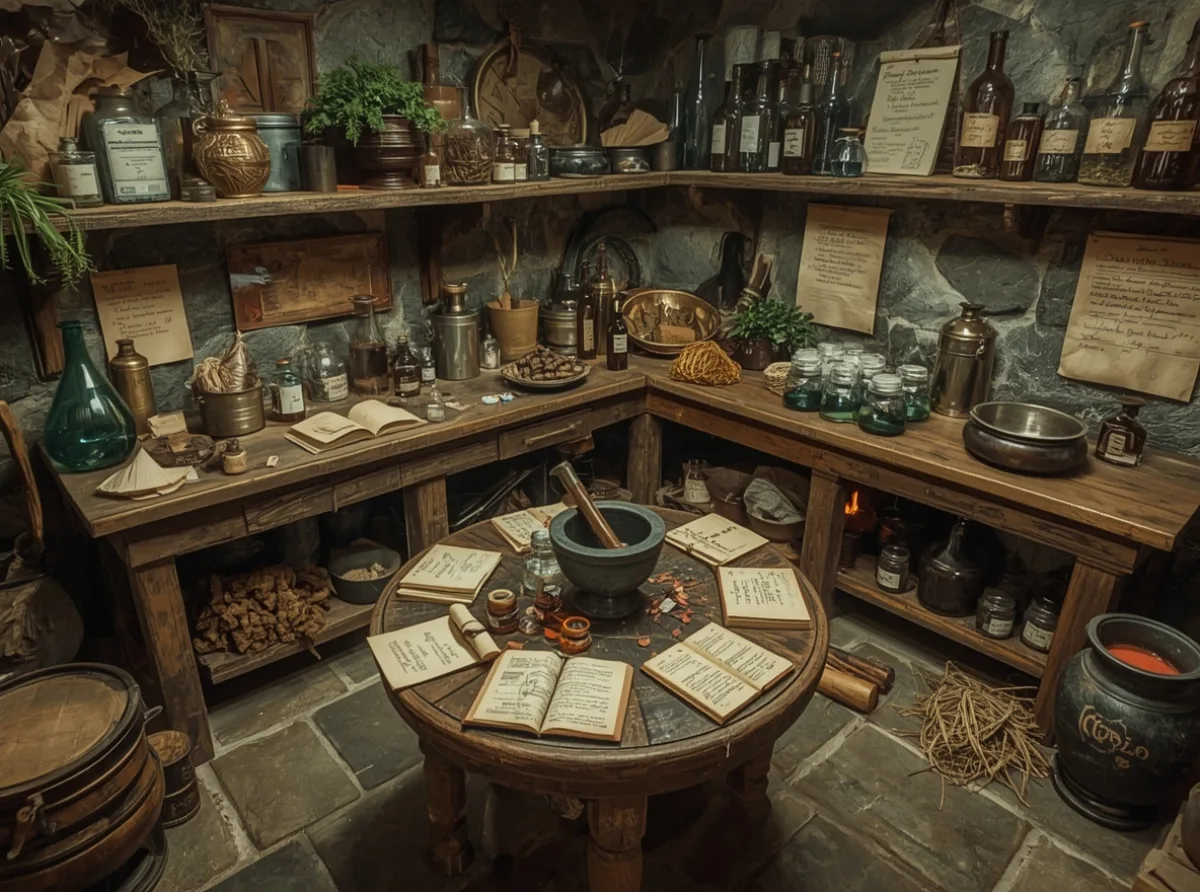
Fantasy alchemist names work best when they sound like they belong to a person who spends equal time mixing rare ingredients and studying forgotten symbols. A strong name in this theme usually carries a hint of age, mystery, and controlled danger. It may feel scholarly, but it should never sound sterile.
That balance is what gives the naming style its arcane flavor. The name can suggest old libraries, glass vials, sealed cabinets, and handwritten formulas without needing to explain any of it. A single name can carry a lot of atmosphere if the sounds feel deliberate.
In games, stories, and roleplay, these names often need to do more than identify a character. They help imply whether the alchemist is a healer, a poison maker, a royal court chemist, or a seeker of forbidden transmutation. The best names hint at that role immediately.
What gives alchemist names their arcane flavor
Alchemist names feel memorable when they combine three things: structure, sound, and implied purpose. Structure is the shape of the name. Sound is how it feels when spoken. Implied purpose is the sense that the character belongs in a world of experiments, rituals, and rare materials.
Names in this theme often borrow from several directions at once. Some feel Latin-influenced. Some sound medieval. Others have a quieter scholarly edge that suggests long years of study. When those elements are mixed carefully, the result feels more immersive than a name built from random fantasy syllables.
A good fantasy alchemist name should suggest craft, not just magic. It may sound old, precise, or secretive, but it should also feel connected to real tools, ingredients, and methods.
There is also a difference between a name that sounds mystical and one that sounds usable in a setting. A name like that should be easy to remember, but not too plain. It should feel like it belongs on a labeled bottle, a laboratory ledger, or a whispered warning.
Classic names with a scholarly arcane tone
These names lean into old-world elegance and a careful, learned feel. They suit alchemists who keep notes, catalog ingredients, and prefer order over chaos. The tone is refined, a little severe, and very usable in medieval or high-fantasy settings.
- Alaric Vey
- Seren Marrow
- Lucian Thorne
- Edric Vale
- Merrowin Hale
- Caelum Rook
- Felician Wren
- Orin Bellweather
- Theron Ashby
- Isolde Marr
- Valen Crowth
- Octavian Quill
- Evander Moss
- Selwyn Fallow
- Amaran Voss
- Branwick Elsin
- Corvin Malth
- Elias Durne
- Jorren Athel
- Maelis Vane
These names work because they sound like they come from a world where knowledge is archived, inherited, and guarded. They do not try too hard. That restraint makes them feel more believable when attached to a potion maker or research-minded mage.
What makes this group feel stable
Most of these names use clean consonants and familiar fantasy shapes. They are not overcomplicated, and that helps them feel grounded. If the character is meant to be dependable, disciplined, or academically trained, this style fits very well.
They also leave room for titles. A name like Lucian Thorne can become Master Lucian Thorne, while Isolde Marr could be called Lady Marr in a court setting. That flexibility is useful for roleplay and lore writing.
Names with a darker and more dangerous edge
Some alchemists are not gentle scholars. They deal in toxins, volatile reactions, banned recipes, or experiments that should have stayed sealed. Names in this section carry a sharper mood. They sound a little colder, and sometimes a little corrupted.
- Veyran Ash
- Mordren Vale
- Nyss Lorc
- Halvor Cain
- Seraph Dusk
- Caldrin Hex
- Vesper Mourn
- Riven Vahl
- Thalen Brine
- Morcant Pyre
- Elric Shade
- Orryx Fen
- Drelm Voss
- Kael Mortin
- Ysolde Crowe
- Varren Coil
- Lucera Wraith
- Torven Nox
- Bellan Graves
- Rhodin Sable
There is a noticeable shift here. The names feel less measured and more severe. They suggest labs with locked doors, burned notes, and ingredients that should not be touched without gloves.
Darker alchemist names usually rely on harder sounds, deeper vowels, and words that imply ash, shadow, poison, decay, or night. That does a lot of work before the character even speaks.
This type of name is often useful for antagonists, morally gray researchers, or characters whose work comes at a cost. It can also fit someone quiet and controlled, which makes the danger feel more subtle.
Useful naming cues for darker alchemists
- Choose one sharp or heavy sound in the surname.
- Let the first name feel restrained rather than theatrical.
- Use imagery tied to smoke, bone, dusk, rust, or venom.
- Avoid stacking too many dramatic syllables at once.
A name becomes more convincing when the danger feels implied instead of announced. Veyran Ash sounds controlled. Morcant Pyre sounds like someone who knows too much. Both are memorable for different reasons.
Names with a regal and courtly tone
Not every alchemist belongs in a hidden tower. Some serve noble houses, kings, or imperial academies. Their names often need to sound polished, formal, and a little distant. They should feel comfortable in a palace hallway as well as a laboratory.
- Aurelian Frost
- Marcelline Vale
- Galen Ors
- Seraphine Lorne
- Dorian Vel
- Elowen Caust
- Cassian Rell
- Amelric Vayne
- Juliana Merith
- Leont Varr
- Isaurian Pell
- Theressa Quen
- Orianne Sel
- Luceris Hallow
- Virelian Dent
- Calista Roen
- Emmerich Sorel
- Althaea Voss
- Gideon Valecrest
- Marcian Elsin
These names lean into elegance, but they avoid sounding too ornamental. That matters. A court alchemist should not sound like a stage magician. The name should suggest discipline, lineage, and quiet authority.
They are especially effective in worlds where alchemy is tied to politics. A royal healer or an imperial poison expert needs a name that feels credible beside nobles, diplomats, and officials. This group does that well.
How courtly names change the character impression
A regal name makes the alchemist feel trained, trusted, and possibly watched. It can imply access to rare resources and dangerous knowledge controlled by the state. Even a quiet name can feel powerful if it has that polished edge.
For example, Seraphine Lorne feels like someone who signs reports with a steady hand. Aurelian Frost feels like a specialist whose work is valued but feared. Both names keep their arcane flavor while shifting into higher social territory.
Names with ancient and ritualistic weight
Some fantasy alchemists feel older than the system around them. Their names should sound like they came through centuries of tradition, oral transmission, and guarded manuscripts. This style works well for ancient orders, forgotten schools, and ritual-based magic.
- Ithran Del
- Saelic Mar
- Othren Vaal
- Mezrin Tal
- Arkhai Sol
- Vhalis Orr
- Toriel Neth
- Eryndor Keth
- Calem Vire
- Jasriel Mor
- Thavren Il
- Olyss Venn
- Merathis Cen
- Zephar Kael
- Ilvaren Thol
- Rhevan Solis
- Cyrdan Oru
- Almyr Vesh
- Nereth Cor
- Vireth Hal
This section tends to use names that feel compressed and symbolic. The sounds are often softer, older, and more formal. That gives them a ritual atmosphere without making them overly elaborate.
Ancient-sounding alchemist names often feel strongest when they sound inherited rather than invented. A name that seems tied to a tradition can instantly deepen a character’s history.
These names are ideal for characters who work with lunar reagents, sacred metals, sealed formulas, or relic ingredients. They suggest that the craft has rules older than the current kingdom.
Names that feel practical, modest, and believable
Arcane flavor does not always need to be grand. Some of the best fantasy alchemist names sound practical first, magical second. That works especially well for traveling potion sellers, village healers, hedge alchemists, or guild assistants.
- Bram Hollow
- Lena Cask
- Milo Fern
- Tarin Webb
- Nessa Clay
- Garric Hume
- Perrin Gant
- Etta Rowe
- Jonas Reed
- Mira Cinder
- Rook Fenner
- Hollis Tane
- Bela Orrin
- Davin Brook
- Sera Latch
- Quill Arden
- Maren Vale
- Tobin Kest
- Iris Mallow
- Noll Brant
These names are useful because they do not force a huge backstory. They feel like people who might actually exist in a world with markets, guild records, and roadside workshops. That ordinary quality makes the magical side stand out more.
If the character is meant to be approachable, this is often the safest route. A simple name can still feel enchanted when it is paired with the right setting and habits. A bottle label, a copper still, and a tidy notebook can do the rest.
When simpler names work better
- When the alchemist is a local healer rather than a legendary figure.
- When the story needs realism inside a fantasy world.
- When the character’s personality is calm and methodical.
- When you want the craft to feel more important than the name.
Names like Lena Cask or Maren Vale leave room for detail. They do not compete with the world. They support it.
Names with a more experimental and esoteric sound
Some settings call for names that feel unusual, but still readable. These can suit scholars of transmutation, astral mixtures, dream reagents, or alchemists who work at the edge of accepted theory. The names should sound strange in a controlled way.
- Xael Mir
- Oryn Vek
- Lyssor Quen
- Arvel Nix
- Tivren Sol
- Elyx Mar
- Vorris Kehl
- Saiven Orr
- Quenric Vaal
- Myrloth Fen
- Zerian Tov
- Ilyx Cern
- Rhovan Pell
- Dexel Vorn
- Alar Vesh
- Nyrel Oth
- Caiven Sore
- Therix Meln
- Veyl Corin
- Oris Kelm
This style can be useful when you want a name that feels arcane without falling into predictable fantasy patterns. It has a more experimental pulse. The challenge is keeping it smooth enough to pronounce.
That balance matters. If the name becomes too crowded with unusual letters, it can feel less like a character name and more like code. Clean spacing and a steady rhythm help preserve the fantasy feel.
How to match a name to the kind of alchemist
The same naming style does not fit every kind of alchemist. A poison expert, a guild apothecary, and a forbidden transmuter may all work with the same discipline, but they should not share the same mood. The name should point toward the role.
| Alchemist type | Name tone | Examples |
|---|---|---|
| Healer | Soft, steady, clean | Maren Vale, Iris Mallow |
| Poison specialist | Sharp, dark, controlled | Veyran Ash, Torven Nox |
| Royal chemist | Polished, formal, refined | Aurelian Frost, Seraphine Lorne |
| Ancient scholar | Old, ritualistic, weighted | Ithran Del, Merathis Cen |
| Experimental mage | Unusual, clever, unstable | Xael Mir, Lyssor Quen |
The table above is not about strict rules. It is about impression. A name only needs to point in the right direction. Once it does, the rest of the character can fill in the details.
If a name does not match the alchemist’s daily work, the character can feel disconnected from the world. A believable name usually echoes what the character handles, studies, or fears.
Common sound patterns that create arcane flavor
There are a few patterns that show up often in strong fantasy alchemist names. They are not mandatory, but they help a name feel more rooted in the genre. The trick is to use them with restraint.
- Soft openings: names beginning with A, E, I, or S often feel scholarly or mystical.
- Firm middle consonants: K, T, V, and R add a precise, crafted feel.
- Old-world endings: -in, -el, -or, -e, and -is can make a name feel ancient or formal.
- Nature-linked surnames: Ash, Vale, Moss, Fen, Brine, and Sable tie the name to ingredients and terrain.
- Tool-like surnames: Quill, Cask, Latch, Reed, and Bellweather suggest notebooks, bottles, and measurement.
Names do not need every pattern at once. In fact, too many signals can make the name feel crowded. One strong cue is often enough.
Variations that keep the same flavor
Sometimes the best name is a slight variation of another one. That is useful when you want to preserve a tone while adjusting how grand, dark, or casual it feels. Small changes can make a noticeable difference.
- Lucian Thorne becomes Lucian Vale for a softer feel.
- Veyran Ash becomes Veyran Moss for a more herbal tone.
- Seraphine Lorne becomes Seraphine Quen for a colder court style.
- Ithran Del becomes Ithran Sol for a more ceremonial mood.
- Maren Vale becomes Maren Cask for a more practical shopkeeper vibe.
That kind of adjustment is especially useful in roleplay communities and character sheets. A name can be tuned until it fits the exact version of the character you have in mind.
Final group of names with mixed arcane flavor
These names sit between several styles. They are useful when the character has layers: learned, secretive, a little formal, but not fully gloomy. They also work well if you want something flexible enough for multiple fantasy settings.
- Edrin Voss
- Selora Neth
- Calian Rook
- Meris Vale
- Torric Ashen
- Vallis Quill
- Arden Morrow
- Lysen Cor
- Orren Bell
- Maevra Cind
- Joric Hallow
- Neral Vane
- Cyris Fen
- Ivara Sol
- Brenric Thale
- Orlaine Voss
- Thorin Elms
- Zarela Moss
- Fenric Vale
- Elsin Varr
These names keep the arcane flavor without locking into one strict mood. That makes them easy to place in different worlds, from quiet village apothecaries to dangerous imperial laboratories. They feel ready for use.
When a fantasy alchemist name works, it usually does one simple thing well: it makes the craft feel real inside the world. The sound of the name, the shape of the surname, and the atmosphere around it all matter. A strong choice can suggest glass, smoke, herbs, and hidden formulas before the character ever steps into view.