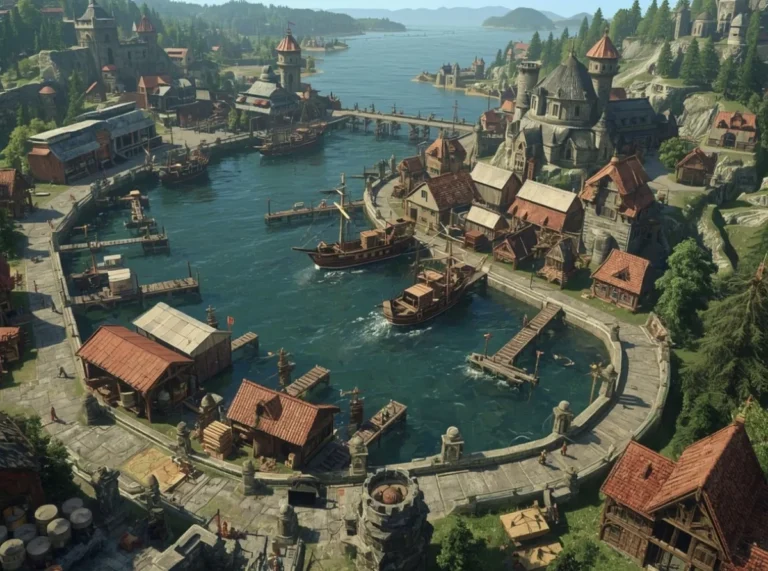
Some fantasy names feel ordinary the moment you say them. Others leave a trace behind. They suggest weather, history, distance, and a certain kind of silence. A strong world name can do that with very little effort. It can make a setting feel old, dangerous, sacred, or strangely beautiful before a player ever sees a map.
That is why atmosphere matters so much. A fantasy world name is not just a label. It shapes expectations for the forests, cities, ruins, and people inside it. A softer name can make a realm feel hidden and ancient. A harsher one can make it sound harsh, military, or corrupted. The right choice depends on the mood you want to carry through the whole setting.
In games, roleplay, and worldbuilding, names often do the first job of storytelling. Long before quests, factions, or lore entries, the name tells people what kind of place they are entering. Some names lean into mystery. Some sound royal. Some feel wild and untamed. The best ones are memorable because they match the world around them.
What Gives a Fantasy World Name Its Atmosphere
A name feels atmospheric when it carries more than sound alone. The vowels, consonants, rhythm, and length all influence how the world is imagined. Soft syllables often feel ancient or magical. Hard consonants can make a place sound severe, industrial, or warlike. Names with open endings usually feel broad and expansive, while clipped endings can sound contained and tense.
History also matters. A world with layered civilizations rarely sounds like a freshly invented place. It feels worn, inherited, and slightly uneven. That is why fantasy names often work best when they suggest old languages, forgotten rulers, or natural landmarks. Even if the name is entirely invented, it should feel like it came from a place with memory.
The most immersive fantasy world names usually hint at one of three things: geography, culture, or old conflict.
Geography gives a world shape. Culture gives it identity. Conflict gives it weight. A name that balances even two of these often feels more believable than something that tries to sound fantasy-like without a clear mood.
Common Atmospheres Behind Strong Fantasy Names
Before choosing names, it helps to know the mood you want to create. A name that works for a floating kingdom may feel wrong for a ruined empire or a moonlit swamp. Different atmospheres create different expectations, and players notice that quickly. The list below breaks down some of the most useful tones in fantasy naming.
- Ancient and sacred
- Mystical and hidden
- Royal and elegant
- Dark and broken
- Wild and untamed
- Epic and legendary
- Cold and distant
- Dreamlike and surreal
Each of these moods can be built through sound. Ancient names often use flowing syllables and old-feeling endings. Dark names may use sharp clusters or heavy consonants. Royal names often sound balanced, controlled, and deliberate. Wild names usually feel more organic, with rough edges or natural references.
Names That Feel Ancient and Sacred
Ancient names often work best when they sound like they have survived many generations. They should feel dignified without sounding too modern. These names are especially useful for old kingdoms, temple cities, forgotten lands, and magical empires that still shape the present.
- Altharion
- Veyrath
- Iskalen
- Orethuun
- Talmora
- Seravyn
- Kaelthar
- Ysorien
- Morveth
- Elunthar
- Aurelth
- Druvanna
- Solyren
- Thalara
- Eldwynn
- Vaelisar
- Nerathis
- Caldrune
- Hesoria
- Vaelthar
These names work because they feel layered. You can imagine them on carved stone, old banners, or broken statues in a ruined capital. They do not sound rushed. They sound inherited. That makes them useful for worlds where the past still affects the present in visible ways.
If you want the atmosphere to feel even older, lean into repeated vowel sounds and long endings. Names like Orethuun or Ysorien feel ceremonial. Names like Caldrune or Morveth feel like they belong to noble houses, ancient orders, or sealed archives.
Good uses for sacred-sounding names
- Temple realms
- Lost empires
- Celestial cities
- Arcane libraries
- Bloodline kingdoms
Names That Feel Mystical and Hidden
Mystical names work well when the world should feel partially out of reach. These are good for secret valleys, enchanted forests, hidden islands, and places where travel feels uncertain. The atmosphere should suggest that the land itself remembers things people do not.
- Veliscar
- Moonmere
- Ardelyn
- Feyrune
- Silath
- Evermoss
- Nyvella
- Wyralune
- Odrienne
- Vaelmist
- Lunarae
- Eirhollow
- Thyssel
- Miravale
- Cindralis
- Hallowyn
- Asterveil
- Rivenbloom
- Owlshade
- Velora
These names are useful when you want the world to feel intimate rather than massive. A place called Moonmere immediately suggests still water and nighttime quiet. Eirhollow feels tucked away, maybe protected by old magic. Asterveil sounds elegant but uncertain, like something glimpsed through fog.
The trick with mystical naming is restraint. If every word sounds magical, nothing stands out. A few softer names can do a lot of work when the world also contains harder, more grounded locations. That contrast makes the hidden places feel more special.
Small variations that change the mood
- Moonmere, Moonmere Vale, Moonmere Hollow
- Velora, Velora Deep, Velora Reach
- Feyrune, Feyrune Glade, Feyrune Hollow
- Vaelmist, Vaelmist Shore, Vaelmist Crossing
Names That Feel Royal and Elegant
Royal fantasy names tend to sound controlled and well-shaped. They often fit capital cities, noble domains, high courts, and polished magical societies. The mood should feel composed, not casual. These names work best when the world values ceremony, lineage, or formal power.
- Valedran
- Aramisel
- Corvayne
- Elareth
- Seranthis
- Veyloris
- Calisandre
- Thornvale
- Alderis
- Mirathen
- Rosavelle
- Elyndor
- Caerwyn
- Almoris
- Virelian
- Hesparis
- Lenorae
- Dravelle
- Orindel
- Selverin
Elegant names often use smooth transitions between syllables. They avoid awkward stops unless you want a sharper, more aristocratic edge. Calisandre feels refined and large enough for a capital. Rosavelle is gentler and more courtly. Corvayne has a cleaner, colder finish, which can work well for a proud house or border kingdom.
Royal names feel believable when they sound organized, not overdesigned.
That means balance is more useful than ornament. A name with too many unfamiliar letters can feel forced. A name with a clear shape feels like it belongs on seals, maps, and formal declarations.
Names That Feel Dark and Broken
Dark fantasy worlds often need names that sound damaged, old, or morally worn down. These names can suggest ash, iron, plague, forgotten wars, or lands that have been cut off from hope for a long time. They do not need to be loud. In fact, some of the best dark names are quiet and severe.
- Graveholt
- Varkesh
- Duskmar
- Kharven
- Rothvale
- Mourncairn
- Blackmere
- Threnor
- Veskar
- Hollowfen
- Carrowick
- Umberfall
- Dreadwynn
- Morhallow
- Ashverin
- Skelmoor
- Gloamreach
- Ravencairn
- Tarnhold
- Nerrowick
These names feel heavier because they use rough edges and darker imagery. Mourncairn sounds like a place built over loss. Gloamreach suggests a wide region that stays half-hidden. Tarnhold feels fortified, but not safe. That tension is useful in grim settings.
Dark names work especially well for broken kingdoms, cursed frontiers, and hostile wastelands. They can also support political intrigue. A city called Rothvale might still be alive and functioning, but the name suggests pressure underneath the surface. That makes it interesting.
Sound patterns that help dark names work
- Sharp endings like -k, -th, -sh, and -rk
- Heavy syllables with low vowel sounds
- Natural words blended with harsh roots
- Names that imply ruin, ash, shadow, or bone
Names That Feel Wild and Untamed
Some fantasy worlds should feel less controlled. They might be full of old forests, living mountains, storm coasts, and traveling clans. Wild names usually sound more alive than formal. They suggest movement and nature rather than rule and order.
- Brackenwild
- Stormpine
- Raventhorn
- Windholt
- Frostbriar
- Ashgrove
- Wildmere
- Foxhollow
- Bearcliff
- Thistlefen
- Redbark
- Hollowridge
- Stonewren
- Moorhaven
- Highfen
- Greenmourn
- Wolfrest
- Rainbarrow
- Oakshade
- Brindlewatch
Wild names are especially useful when a region has strong natural identity. A mountain land called Stormpine feels immediately clear. Raventhorn suggests a place with sharp edges and old animals. Wolfrest feels like a remote valley where survival matters more than politics.
These names often combine an animal, plant, weather pattern, or landform with another grounded word. That keeps them from feeling too abstract. The result is a world that feels shaped by terrain first and civilization second.
Names That Feel Epic and Legendary
Epic fantasy names need scale. They should sound large enough to hold kingdoms, wars, ancient magic, and world-changing events. These names usually work best for central continents, legendary realms, or places spoken of in prophecy and history books.
- Aldorheim
- Vaelcyr
- Thyralon
- Celesthar
- Orinthal
- Draemora
- Kaldoris
- Eryndral
- Myrathos
- Solvekhar
- Aventhyr
- Loradune
- Cyralith
- Toraviel
- Eldrosyn
- Varenthia
- Helcaron
- Soryndel
- Varethis
- Ithralon
Epic names tend to use strong rhythmic structure. They often have three or four syllables and feel balanced when spoken aloud. Thyralon sounds like a realm with banners and old bloodlines. Helcaron feels like a stronghold or central power. Eldrosyn has a mythical quality that fits major lore events.
These names are useful when the world itself is part of the story. They should not be too small in feeling. Even if the region is only one kingdom, the name should leave room for history that stretches beyond the current age.
When to use more dramatic names
- Primary campaign settings
- Long-running RPG worlds
- Ancient continents
- Worlds with prophecy or destiny themes
- High fantasy factions and capitals
Names That Feel Cold and Distant
Cold names create distance. They are useful for frozen kingdoms, isolated islands, northern borders, and places where people have learned to endure rather than flourish. The atmosphere should feel wide, quiet, and resistant to comfort.
- Frosthall
- Nivareth
- Icewren
- Sablefjord
- Varrenhusk
- Snowcairn
- Hailmere
- Northveil
- Rimewatch
- Driftmar
- Glacierun
- Wintrow
- Farhold
- Brumalyn
- Skydrift
- Coldharrow
- Whitefen
- Axelmere
- Veyfrost
- Sornhollow
Cold names often work because they feel sparse. They do not rely on decoration. Instead, they lean on place and climate. Northveil sounds like a region half-hidden by winter. Sablefjord feels like a coast that is beautiful but unforgiving. Coldharrow brings in a harsher, more grounded feeling.
These names are strong for border realms, frozen wastelands, and distant territories where travel is difficult. They also pair well with darker lore. A world can be cold without being evil, but the feeling of isolation is often enough to make it memorable.
Names That Feel Dreamlike and Surreal
Dreamlike names can be useful when the setting bends reality. Floating forests, mirrored lakes, shifting cities, and strange enchanted zones often need a lighter naming style. These names should feel a little unfamiliar without becoming impossible to remember.
- Elarune
- Mirelune
- Starveil
- Lioraeth
- Velunor
- Auralis
- Dreamhollow
- Nysera
- Cindrava
- Ophirune
- Lunethra
- Marivane
- Syravel
- Aurivale
- Feorlis
- Vaeryn
- Ilyrith
- Sablelune
- Orlume
- Eversyl
These names often sound like they are one step removed from ordinary language. They still need a readable shape, though. If a name becomes too abstract, it loses its anchor. Starveil is memorable because it feels familiar and strange at the same time. Dreamhollow is direct, but it still carries atmosphere. Auralis feels luminous without being obvious.
Dreamlike names work best when they are clear enough to remember and strange enough to feel unreal.
How to Match a Name to the World Around It
A good fantasy world name should not live alone. It should fit the tone of the maps, factions, architecture, and history. If the name sounds elegant, the world should probably have some sense of ceremony, trade, or refined magic. If the name sounds wild, the environment should support that with rough terrain or decentralized culture.
One practical way to test a name is to say it next to a few world details. Imagine it beside a capital city, a ruined monastery, or a mountain pass. Then ask whether it feels consistent. A name like Veliscar feels more believable if the world has foggy coasts, old statues, and secret routes. A name like Blackmere feels right when the setting has marshland, decay, or old battles.
- Use soft names for mystical or sacred regions
- Use sharp names for hostile or militarized places
- Use balanced names for capitals and kingdoms
- Use nature-based names for wild territories
- Use longer names for ancient or legendary realms
Useful Naming Patterns for Atmospheric Worlds
Many memorable fantasy names follow a pattern rather than a single formula. Once you notice the pattern, you can build your own variations without losing the mood. This is especially helpful when a world needs many locations that still feel connected.
| Pattern | Effect | Example |
|---|---|---|
| Old-root + ending | Ancient and formal | Altharion |
| Nature word + dark twist | Wild with tension | Ravencairn |
| Soft vowel chain | Mystical and graceful | Elarune |
| Hard consonants + short form | Harsh and grounded | Varkesh |
| Landform + mood word | Clear and atmospheric | Stormpine |
These patterns are not rules. They are tools. If a setting feels flat, changing one part of the pattern can shift the whole tone. A place called Windholt feels different from Windmere. The first sounds rougher and more exposed. The second feels calmer and more reflective.
Mixing Tones Without Losing the Mood
Some of the most interesting worlds combine several tones. A kingdom might be royal on the surface, but the borders could be wild and dangerous. A sacred forest might hide a broken ruin at its center. In those cases, names can help separate layers of mood inside the same setting.
- Use a polished capital name and rough surrounding region names
- Pair sacred names with darker subregions
- Blend elegant names with natural words for balance
- Use ancient names for main continents and simpler names for local landmarks
This approach keeps the world from feeling repetitive. It also helps players understand the geography through naming alone. A region called Caerwyn feels very different from a nearby marsh called Hollowfen. That contrast creates a stronger mental map.
Final Set of Standout Names by Atmosphere
Some names do not fit neatly into one category, which can be useful. They carry a mood that feels distinct right away and can be adapted to many settings.
- Aldwyr
- Vespera
- Thaldrin
- Moonscar
- Erymoth
- Caelmere
- Duskvale
- Oravyn
- Skylorn
- Runebarrow
- Elmoris
- Veyhollow
- Stormaelis
- Narethal
- Iverroth
- Solmere
- Brightharrow
- Cavandor
- Wyrmrest
- Lunthorn
These names work because they feel usable, not just decorative. They can be attached to kingdoms, regions, cities, or even major landmarks without sounding out of place. Moonscar feels like a scarred place in the landscape. Runebarrow suggests burial, magic, and old power in one word. Wyrmrest sounds like a landmark tied to legend, but still grounded enough to remember easily.
When a world name carries the right atmosphere, it does a quiet kind of work. It shapes the way players expect the land to behave. It gives the first hint of how old the world is, how dangerous it may be, and what kind of story might happen there.