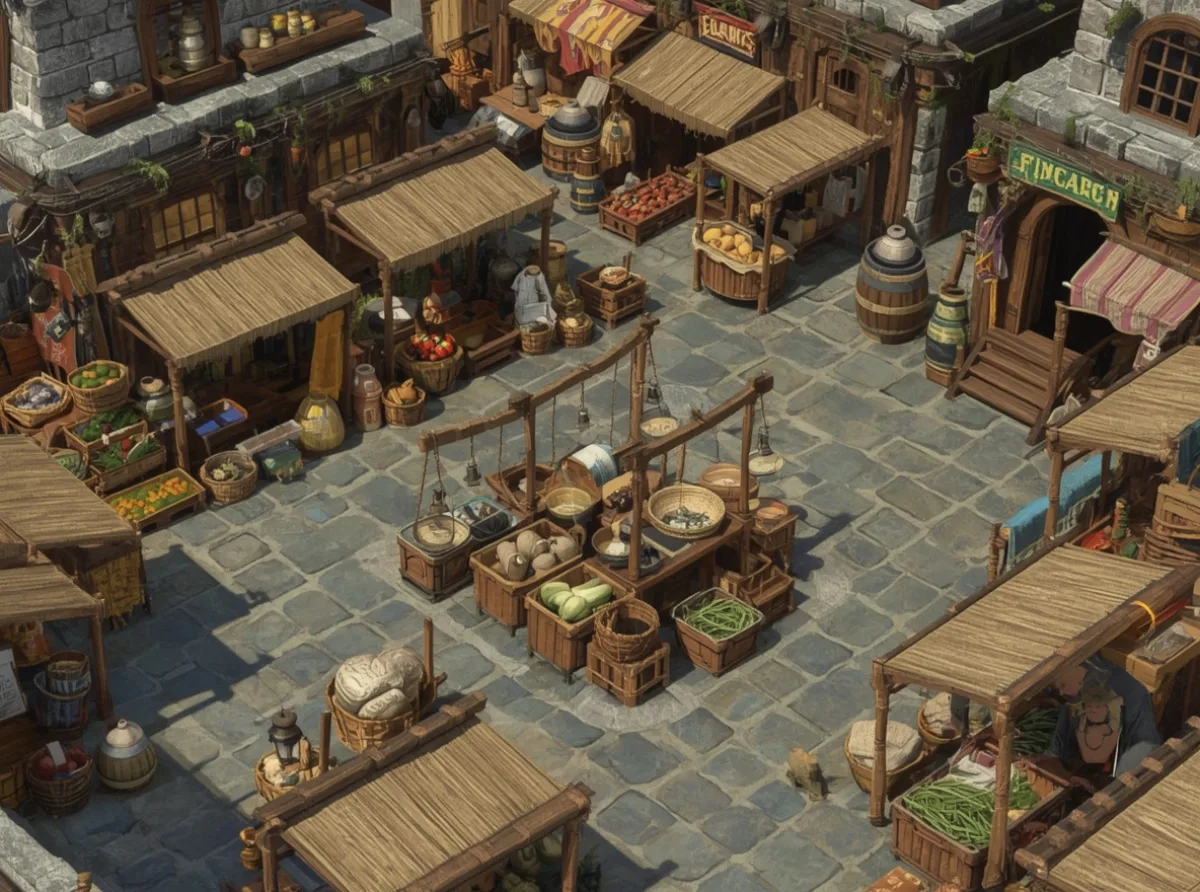
A good fantasy marketplace name should feel busy before anyone even steps inside. It needs to suggest movement, noise, trade, and a place where new things arrive every morning. The best names do not just label a location. They hint at stacked crates, shouted deals, strange imports, and the sense that something is always happening just out of sight.
That lively feeling matters because marketplaces are rarely quiet in fantasy settings. They sit at the center of towns, border crossings, harbor cities, caravan routes, and magical capitals. A strong name can make a simple market feel like a landmark. It can also help define the culture around it, whether the setting leans rustic, royal, coastal, enchanted, or a little rough around the edges.
Some names sound warm and welcoming. Others feel crowded and energetic. A few carry a hint of mystery, which works well if the market deals in rare ingredients, relics, charms, or goods from distant lands. The tone changes everything. A name that fits a cheerful bazaar may feel wrong in a shadowed trade quarter, even if the stalls sell the same things.
The lists below focus on names that feel alive in different ways. Some are simple and classic. Others feel more magical, regional, or dramatic. Each group is built to sound usable in games, roleplay, and worldbuilding without feeling forced.
What gives a fantasy marketplace name a lively atmosphere
Lively marketplace names often share a few traits. They suggest motion, variety, and public gathering. Even a quiet market in a fantasy world usually feels active through its name alone. That can come from words tied to trade, sound, color, weather, or local geography.
Names with lively atmosphere usually avoid being too static. A place called Stone Square may feel sturdy, but not especially animated. A name like The Roaming Lanterns or Brightwater Exchange adds something more immediate. You can almost picture the scene. The name carries action, texture, and social energy.
A memorable fantasy market name usually works on two levels: it identifies the place, and it suggests what it feels like to walk through it.
That second part matters a lot. Players and readers remember places that seem inhabited. They want to imagine fishmongers calling from the docks, cloth flapping over stalls, and merchants opening shuttered carts at dawn. A lively name helps build that image before any description begins.
Good names also match the setting’s level of fantasy. In a grounded medieval town, a market might need a name that sounds practical with a touch of charm. In a high fantasy capital, the market can be grander and more symbolic. In a darker world, the same kind of place might need a name that feels crowded, secretive, or old.
Classic marketplace names that feel active and welcoming
These names fit towns, river ports, crossroads, and city squares. They sound familiar enough to feel believable, but they still carry motion and personality. They work especially well when you want the market to feel open, communal, and full of daily life.
- Amber Stall Market
- Greenbriar Bazaar
- Sunwheel Square
- Riversong Market
- Lantern Row
- Maplecross Exchange
- Brassgate Market
- Willowford Fair
- Hearthline Bazaar
- Goldmere Commons
- Stonebridge Market
- Morning Coil Market
- Rosegate Exchange
- Cloverhall Market
- Brightarch Bazaar
- Westwind Square
- Honeywick Market
- Red Mill Fair
- Frostleaf Exchange
- Openharbor Market
These names work because they feel rooted in place. Amber, willow, river, and harbor create a setting that seems lived in. They do not overdo the fantasy flavor. Instead, they let the market feel like part of a real town with daily routines and familiar rhythms.
Names like Sunwheel Square and Brightarch Bazaar add a little more visual movement. They suggest a central gathering place where people meet, trade, and linger. That kind of name is useful when the market is meant to be one of the first places a traveler would visit.
Why these names feel easy to use in games
Simple names are often the most flexible. They fit quest hubs, map labels, town notes, and dialogue without needing extra explanation. If a location needs to sound clear and believable, this style does the job well. It gives the market identity without making it feel too ceremonial.
They also support other details around them. A place called Hearthline Bazaar might sell bread, herbs, tools, and fabric. A name like Openharbor Market naturally suggests fish, rope, salt, and sailors. The market name quietly supports the whole scene.
Magical marketplace names with color and movement
When a fantasy world leans more enchanted, the marketplace name can carry that energy. These names feel brighter, stranger, and a little more whimsical. They still sound usable, but they have more glow in them, as if the market sells not just goods but rare curiosities and crafted wonders.
- Moonpetal Bazaar
- Starlace Market
- Glimmerpath Exchange
- Velvet Ember Market
- Thistleglass Fair
- Silverbloom Row
- Twilight Orchard Market
- Radiant Mirth Bazaar
- Crystal Reed Market
- Glowfen Exchange
- Sunmoss Market
- Petalwind Commons
- Hushlight Bazaar
- Opalgate Market
- Wildspark Fair
- Lavender Crown Exchange
- Starharbor Market
- Jade Lantern Square
- Brightpetal Bazaar
- Dreamspill Market
This group feels more alive through color, softness, and motion. Words like bloom, glimmer, sparkle, and wind help create movement. They make the market sound like a place where merchants arrange unusual goods under hanging charms, painted signs, and magical lamps.
The best part of these names is that they can suggest enchantment without becoming too ornate. Moonpetal Bazaar sounds magical, but it is still readable. Thistleglass Fair has a delicate edge. Starlace Market feels elegant and active at the same time. That balance is important if the market needs to feel immersive rather than overly decorative.
For a magical marketplace, one strong image word is often enough. Too many can make the name feel crowded instead of lively.
Good fits for enchanted districts and wizard towns
These names work well in capital cities with mage quarters, fairy crossroads, elven trade halls, or festival streets. They also suit markets that specialize in potions, scrolls, charms, curios, and rare ingredients. The atmosphere can feel bright or mysterious, depending on the surrounding world.
If the market is known for unusual nighttime trading, names like Hushlight Bazaar or Twilight Orchard Market feel especially useful. If the setting is more colorful and celebratory, Brightpetal Bazaar or Radiant Mirth Bazaar may fit better. Each one creates a different rhythm.
Darker market names with crowded, smoky energy
Not every fantasy market is cheerful. Some are tucked into old city walls, port alleys, or border towns where trade is loud and complicated. These names lean into that heavier atmosphere. They still feel active, but the energy is rougher, busier, and more secretive.
- Blackcinder Market
- Ironveil Bazaar
- Gravetide Exchange
- Nightbrick Market
- Smokeharbor Row
- Coalroot Fair
- Red Hollow Market
- Duskwire Bazaar
- Ashgate Exchange
- Rattlestone Market
- Wolfsmoke Bazaar
- Thorncrow Market
- Gloamway Fair
- Brimforge Exchange
- Shadowfen Market
- Coldchain Bazaar
- Rustveil Row
- Hollowspire Market
- Darkwater Exchange
- Fangmere Fair
These names work because they create tension without losing clarity. Blackcinder and Ironveil feel industrial and worn. Gloamway and Darkwater bring in a lower light, which gives the market a late-hour or underground tone. That helps when the market is known for smuggled goods, dangerous deals, or traders who do business after dark.
A darker name does not have to mean evil. It can simply mean dense, weathered, or guarded. Smokeharbor Row sounds like a place where ships unload in grim weather. Ashgate Exchange feels practical but serious. Those details help the market feel like part of a tougher world.
When darker naming works best
This style fits trade districts in cities with political tension, criminal networks, or harsh climates. It also works in fantasy worlds where the market is part of an old fortress town or mining settlement. The atmosphere should feel active, but in a grounded and slightly dangerous way.
Names like Brimforge Exchange and Rustveil Row suggest labor, soot, and heavy industry. Others, like Thorncrow Market and Fangmere Fair, add a sharper edge. If the setting needs the sense that commerce happens in the shadows as often as in the sun, this naming style is strong.
Names that sound festive, crowded, and full of life
Some fantasy markets are defined by celebration. They are places where music carries through the stalls, where food is cooked openly, and where travelers, locals, and performers all mix together. These names feel especially lively because they suggest movement, color, and noise all at once.
- Bannerfall Market
- Joyridge Bazaar
- Feathercourt Fair
- Driftbell Exchange
- Harvestsong Market
- Sunfleck Plaza
- Ribbonstone Bazaar
- Brightfeast Market
- Windcrown Fair
- Goldpetal Exchange
- Harlequin Row
- Mirthvale Market
- Larkspur Commons
- Firesheen Bazaar
- Festival Glen Market
- Sparkmead Exchange
- Roseharvest Fair
- Bellflower Market
- Daygleam Bazaar
- Summerturn Row
These names often feel the most crowded and social. They suggest stalls that open for events, seasonal trade, or annual festivals. Bannerfall Market and Harvestsong Market make the market itself sound like an occasion. That is useful when the location should feel like a destination rather than just a place to buy supplies.
Words like feast, song, bell, and festival create a human sense of rhythm. They imply sound and movement, which naturally makes the setting feel alive. These names can also help establish a lighter tone in otherwise serious fantasy worlds.
For lively festival markets, sound words often matter as much as visual words. Bells, song, and laughter can make a place feel occupied before it is described.
Royal and elegant marketplace names
Some markets belong to wealthy districts, palace cities, or ancient trade capitals. They need names that feel polished without losing warmth. The goal here is not just luxury. It is organized movement, formal trade, and a sense that the marketplace serves nobles, diplomats, and wealthy merchants as often as ordinary citizens.
- Crownveil Market
- Ivorygate Bazaar
- Marblecrest Exchange
- Regalpine Market
- Embercourt Fair
- Silverhall Market
- Bellstone Bazaar
- Highrose Exchange
- Coronet Row
- Pearlbridge Market
- Suncrest Plaza
- Goldcourt Bazaar
- Velour Gate Market
- Heron Crown Exchange
- Brightspire Market
- Opaline Fair
- Queensway Bazaar
- Rosemarble Row
- Starcourt Market
- Hallowell Exchange
These names feel refined because they use materials and symbols associated with rank, beauty, and order. Ivorygate, Marblecrest, and Pearlbridge all sound polished. Crownveil and Goldcourt add a ceremonial layer that suits capital cities or noble trade centers.
Even with that elegance, the names still need movement. Exchange, row, market, and bazaar keep them practical. That balance helps them feel like places where real trade happens instead of ornamental spaces that exist only for display.
How to make elegant names feel alive instead of stiff
Luxury can become distant if the name is too formal. To keep it lively, add words that imply gathering or circulation. Bazaar, market, and plaza are especially useful. So are names with color or light, such as Highrose or Suncrest.
If the world is especially ceremonial, names like Coronet Row and Starcourt Market work well because they suggest public movement within a structured space. They feel busy, but in a controlled, polished way. That makes them useful for capitals where commerce and politics overlap.
Coastal, river, and caravan market names
Some of the most memorable fantasy marketplaces are shaped by travel routes. A harbor market, river market, or caravan stop naturally has a lively atmosphere because goods constantly arrive and leave. The name should reflect that sense of motion across water, road, or open land.
- Harborwake Market
- Dockleaf Bazaar
- Rivercoil Exchange
- Seamoss Market
- Saltwind Row
- Marshgate Fair
- Bridgecurrent Market
- Tideglass Bazaar
- Caravanrest Exchange
- Wagonstar Market
- Dunecross Fair
- Ferrywharf Bazaar
- Bluewake Market
- Crosswind Commons
- Rookshore Exchange
- Lowtide Market
- Dusttrail Fair
- Moonferry Bazaar
- Stonewake Market
- Openroad Row
These names are effective because they imply exchange through movement. Harborwake and Ferrywharf instantly suggest shipping. Caravanrest and Openroad Row point to travel networks and long-distance trade. That gives the market a naturally busy atmosphere, even before any stalls are described.
Water-based names usually feel fluid and steady. Road-based names feel more transient and practical. Both can be lively in different ways. A harbor market may feel full of porters, fish, rope, and salt. A caravan market may feel broader, dustier, and more unpredictable.
Common naming patterns that keep fantasy markets believable
Fantasy marketplace names often follow a few useful patterns. One common structure pairs a descriptive word with a place word, like Amber Stall Market or Pearlbridge Market. Another uses a poetic image, like Moonpetal Bazaar or Harborwake Market. A third leans on function, such as Openroad Row or Caravanrest Exchange.
The strongest names usually avoid sounding random. They have a logic to them. If the setting is a river city, words like tide, wake, ferry, and bridge make sense. If it is a mountain town, forge, stone, pass, and crown may fit better. The atmosphere feels stronger when the name could belong to that world naturally.
It also helps to think about what the market sells. A spice market might suit warmer names like Goldmere Commons or Firesheen Bazaar. A relic market might feel better with names like Ironveil Bazaar or Shadowfen Market. The name should support the goods, not compete with them.
| Atmosphere | Useful word types | Example name style |
|---|---|---|
| Welcoming | Hearth, bloom, river, green | Hearthline Bazaar |
| Magical | Moon, star, glimmer, petal | Moonpetal Bazaar |
| Darker | Ash, smoke, veil, cinder | Ashgate Exchange |
| Festive | Song, bell, feast, banner | Harvestsong Market |
| Elegant | Crown, pearl, marble, gold | Pearlbridge Market |
Mixing tones without losing atmosphere
A lively fantasy market can carry more than one feeling at once. A place might be festive and a little shady. It might be elegant but crowded. It might feel magical in one corner and practical in another. Mixing tones makes the name more flexible, especially in larger settings where the market serves many kinds of people.
For example, Moonpetal Bazaar feels magical and soft, while still sounding like a real place to trade. Smokeharbor Row feels busy, coastal, and slightly dangerous. Brightarch Bazaar is clean and open, but it still has energy. These combinations work because they keep one clear center of gravity while allowing the atmosphere to branch out.
If a name has too many ideas packed into it, the effect can get muddy. A better approach is to choose one main mood and support it with one or two smaller details. That keeps the market memorable without making it hard to picture.
One strong atmosphere usually works better than three competing ones. A market name should feel alive, not overloaded.
Extra name ideas grouped by sub-style
Below are a few more focused sets for different fantasy worlds. These are useful when the market needs a very specific kind of energy.
Old-town market names
- Oldbrick Market
- Gatehouse Bazaar
- Lanternwall Exchange
- Heritage Row
- Townspoke Market
- Cobblefair Bazaar
- Northgate Exchange
- Belltower Market
- Market Cross
- Ironlane Row
- Vintagemill Fair
- Guildharbor Market
- Eastward Exchange
- Oakgate Bazaar
- Stonecircle Market
Wild and rustic market names
- Fernridge Bazaar
- Wildbarrow Market
- Thicket Lane Fair
- Rillstone Exchange
- Pinebough Market
- Meadowcoil Bazaar
- Foxrun Row
- Brookfen Market
- Hollowbranch Fair
- Greenward Exchange
- Brackenstall Market
- Windroot Bazaar
- Harepath Market
- Acorntrail Exchange
- Stonefern Fair
Curious and exotic market names
- Spiceglass Bazaar
- Mirrortide Market
- Jasperveil Exchange
- Orchidshade Fair
- Lotusfire Market
- Silkbloom Bazaar
- Ambermist Exchange
- Nightpepper Market
- Saffronwall Row
- Opalvine Bazaar
- Crescentchime Market
- Firepear Exchange
- Moonspice Fair
- Glassmarsh Market
- Velvetthorn Bazaar
These sub-styles help when one broad list is not specific enough. Old-town names feel settled and historic. Rustic names feel connected to the land. Exotic names introduce unusual trade goods and distant routes. Each group can give the marketplace a distinct role in the world.
Choosing a name that fits the market’s role in the world
A marketplace is more than a shopping area. It can be a meeting point, a rumor hub, a political space, or a cultural landmark. The name should reflect that role. A place that hosts grand civic trade should not sound like a hidden alley stall unless that contrast is part of the design.
Think about who uses the market most often. If farmers, travelers, and townsfolk gather there daily, a warm name like Cloverhall Market or Hearthline Bazaar may fit. If nobles and diplomats pass through, Crownveil Market or Marblecrest Exchange may work better. If the market trades in rare magical items, Moonpetal Bazaar or Starharbor Market can create the right expectation.
That connection between function and atmosphere keeps the name believable. It also makes the world easier to read at a glance. Players notice when a market name hints at class, trade type, and local culture all at once.
Final name sets for lively fantasy marketplaces
These final options lean into strong atmosphere without leaning too far in one direction. They can fit a wide range of fantasy settings and still feel active.
- Lanternrise Market
- Brightcairn Bazaar
- Stormpetal Exchange
- Goldfern Market
- Riverbloom Fair
- Moonbridge Bazaar
- Ashflower Market
- Sunharbor Exchange
- Windglass Row
- Thornlight Market
- Bluecrown Bazaar
- Meadowgate Exchange
- Frostbriar Market
- Starfield Fair
- Ambercoil Bazaar
- Rooftide Market
- Bellroot Exchange
- Glowthorn Row
- Silverwake Market
- Harvestgate Bazaar
These names work because they keep the imagery clear and the movement easy to feel. Lanternrise and Silverwake suggest shifting light and steady activity. Harvestgate and Sunharbor feel communal. Thornlight and Ashflower add a little edge without becoming too harsh.
When a marketplace name has lively atmosphere, it gives the whole location more presence. The best ones feel like they already have a history, a crowd, and a rhythm of their own. They sound like places where goods are exchanged, stories are traded, and the day never stays still for long.